Organizations unknowingly hinder managerial success, leading to disengagement. This article explores work volume and task ambiguity as key contributors to manager burnout.
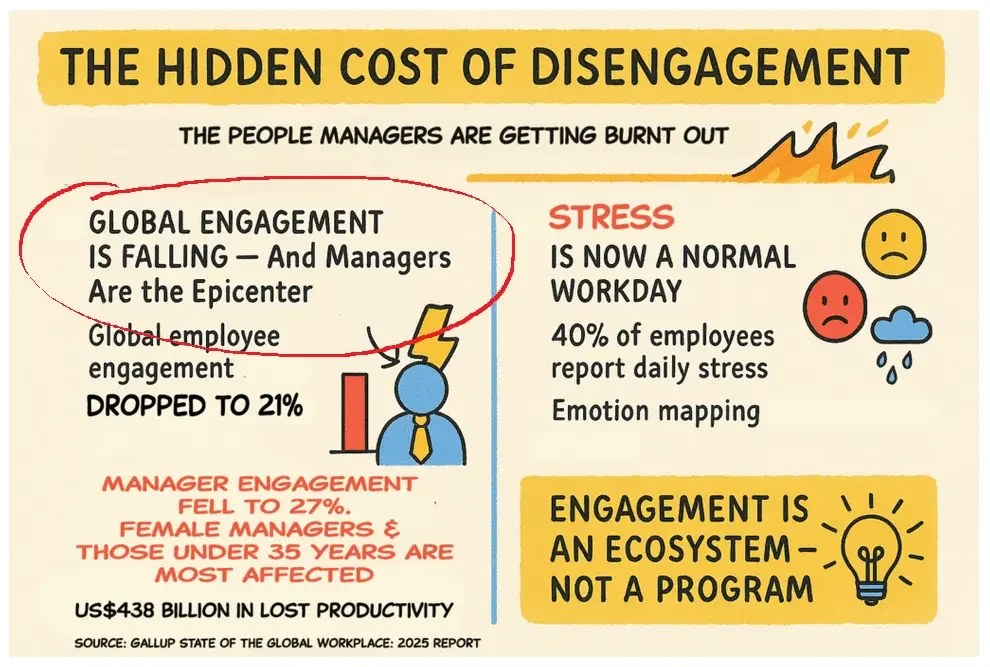
Organizations often undermine their own success, not through poor strategies or a lack of talent, but by creating environments that inhibit effective management.
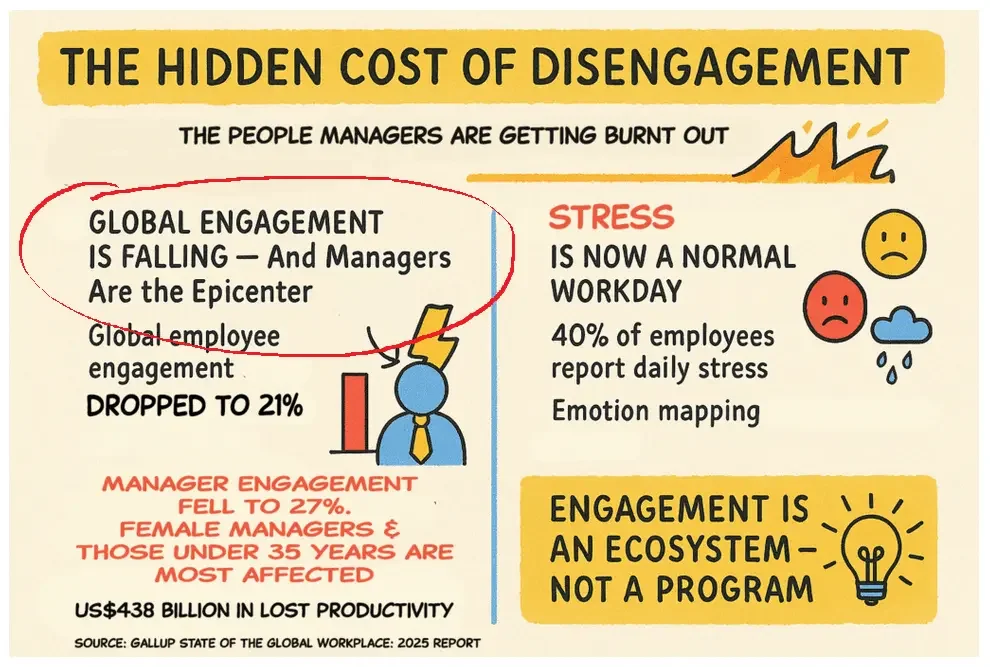
This phenomenon is more widespread than many leaders realize.
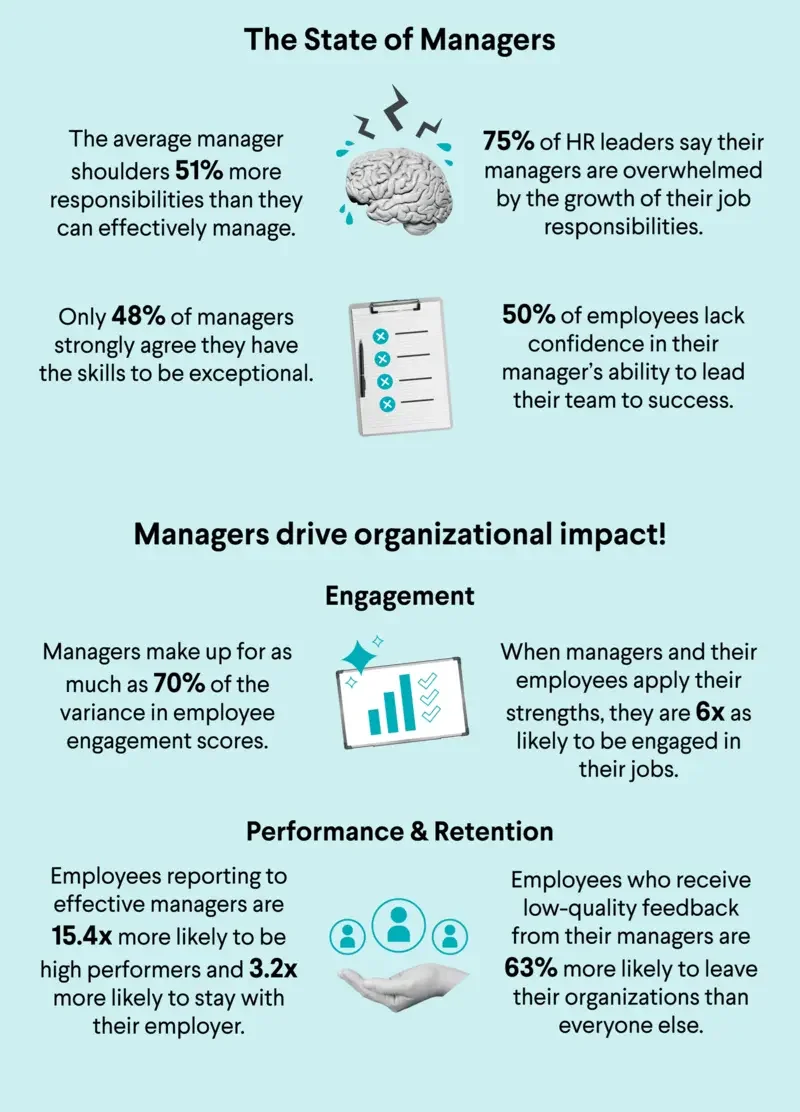
Managers, who play a critical role in shaping team engagement, face challenges that often go unaddressed. Gallup reports that managers are responsible for about 70% of employee engagement across teams.
Given this influence, organizations should prioritize support for their managers.
While spending significant resources on training programs in leadership, conflict resolution, and strategic thinking, a crucial area often overlooked is how to manage the intricacies of daily work.
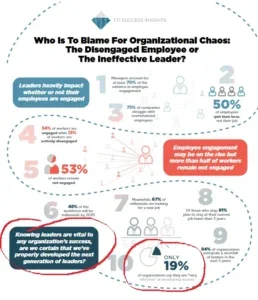
Managers today are inundated with a barrage of information and demands, making it imperative to equip them with skills for managing modern workday complexities.
Without proper guidance on navigating this landscape, many managers find themselves increasingly overwhelmed.
THE RISE OF DISENGAGEMENT
Historically, managers have been among the most engaged employees within organizations.
“Engagement” denotes a positive emotional connection with one’s work and colleagues.
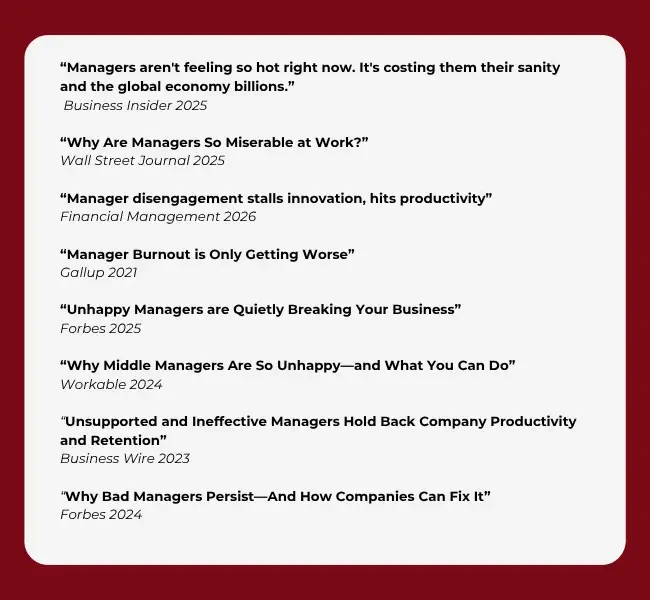
However, recent trends show a decline in manager engagement levels.
Gallup reveals that managers, who once experienced what is termed an "engagement premium," are now exhibiting levels of engagement comparable to their teams.
Notably, diminished engagement among managers has been identified as a primary factor behind decreased overall employee engagement.
Disengagement signifies a mental disengagement from work, which can foster a culture of indifference and de-motivation.
Unfortunately, this trend has escalated in recent times.
According to Gallup’s 2026 State of the Global Workplace Report, manager engagement dropped from 30% to 27% in 2024 and subsequently plummeted to 22% in 2025.
This disengagement has serious repercussions for organizations, translating to significant productivity losses. Gallup estimates the cost of low managerial engagement to the global economy is around $10 trillion annually.
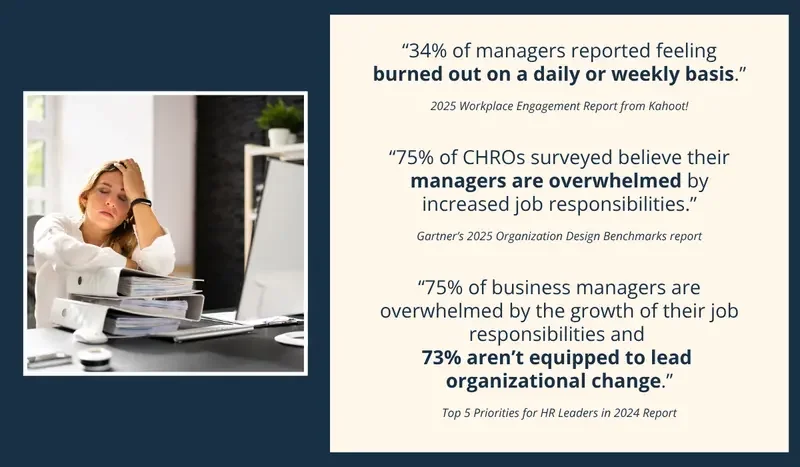
When managers encounter burnout or overwhelm, they are less capable of performing at their best, leading to a domino effect:
- Team cohesion suffers.
- Project progress stagnates.
- Company culture deteriorates.
- Employee engagement declines.
- Profitability wanes.
When managers struggle, the impact reverberates throughout the organization.
Sadly, rather than support, managers are often inundated with demands while receiving less assistance.
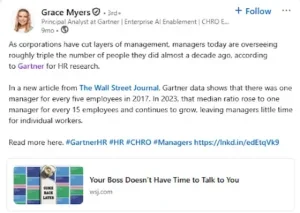
Gallup's 2025 State of the Global Workplace Report indicates that only 44% of global managers had access to formal management training.
As a result, many managers are doing complex jobs without proper training or tools.
They are expected to lead teams, spearhead change, embrace new technologies, foster culture—and somehow manage their own workloads as well.
This overwhelming set of expectations is leading many managers, like my client Sandy, to feel exhausted and overwhelmed.
Sandy manages a team within a large accounting firm while balancing multiple personal responsibilities, and she expressed feeling like her work was impacting her health and welfare.
WORK VOLUME: A HEAVY BURDEN
Today's managers are grappling with escalating workloads that stem both from higher-level executives pushing down expectations and from team needs flowing up.
These increasing responsibilities include:
- Reorganization efforts.
- Data reporting and analytics.
- Innovation initiatives.
- Adapting processes to new standards.
- Technology adoption (e.g., AI introduction).
Management also involves juggling demands from team members, from coaching and culture-building to overseeing task execution and providing professional development opportunities.
With so many competing priorities, managers often feel swamped and are losing track of essential tasks, leading to longer working hours.
Research shows that a staggering number of managers reported feeling entirely unprepared for their initial leadership roles.
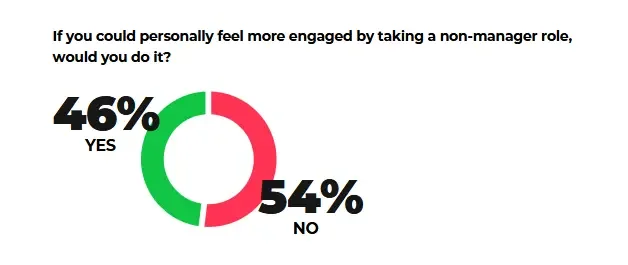
An alarming 63% of managers voiced that being a manager was “much more difficult than they had expected,” as revealed by studies highlighted in various business columns.
Moreover, the number of direct reports per manager has tripled since 2017, according to insights from Gartner.
In 2017, the average manager handled about five employees; now, that figure rises to around fifteen.
This surge in responsibilities lacks accompanying training or strategy to address the growing needs, leading to a heightened risk of burnout.

Sandy’s experience is representative of many managers who silently bear the weight of these expectations while trying to stay engaged.
She noted, “My team can see my stress; I want to model resilience.”
This is a common sentiment among managers struggling with pressure while trying to inspire their teams.
The issue of disengagement is not where the story originates, but rather where it culminates.
NAVIGATING TASK AMBIGUITY
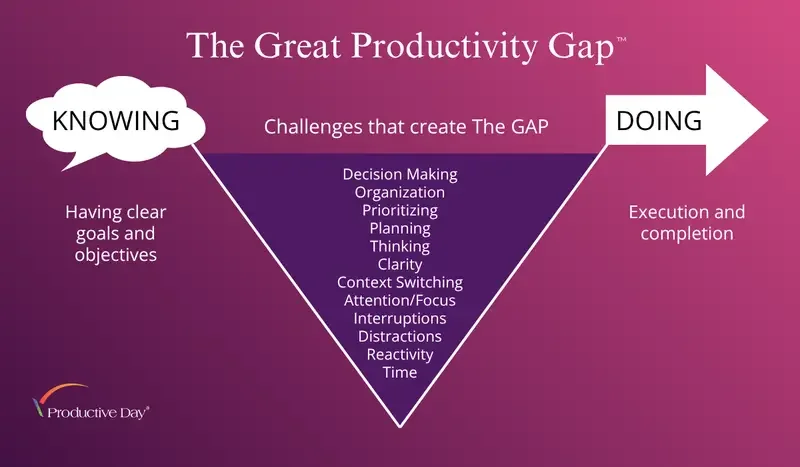
Managers today face the challenge of deciphering where to direct their focus amid a torrent of tasks and responsibilities.
Tasks can range from coaching to strategic thinking to adopting new technologies—each demanding attention and urgency.
This overwhelming complexity leads to task ambiguity, wherein managers cannot clearly distinguish which priorities to address first.
Effective management requires clarity in what duties to tackle when facing an ever-growing heap of responsibilities.

This ambiguity can create chaos as managers shift between tasks without efficient tracking mechanisms.
Often, managers may work longer hours in a bid to catch up, yet still find themselves in a cycle of unfulfilled expectations and low morale.
As they burn out, the sheer volume of work only becomes more burdensome, compounding disengagement and stagnation.
These overlapping cycles of overwhelming demands and unclear expectations create fertile ground for burnout.
ADDRESSING THE MANAGEMENT CRISIS
The current state of management reflects a significant execution gap where high workloads and ambiguous tasks hinder effective leadership.
When managers lack systems for operational execution, the stress of their daily responsibilities disrupts productivity and inhibits progress.
Operational execution is crucial; it determines whether organizations can realize their potential, yet it’s the missing piece from the daily management experience.
Here lies the paradox: While managing vast amounts of work, managers often feel isolated in their struggles.
To succeed, managers must introduce a streamlined method for tackling their workloads.
STEPS TOWARD A SOLUTION
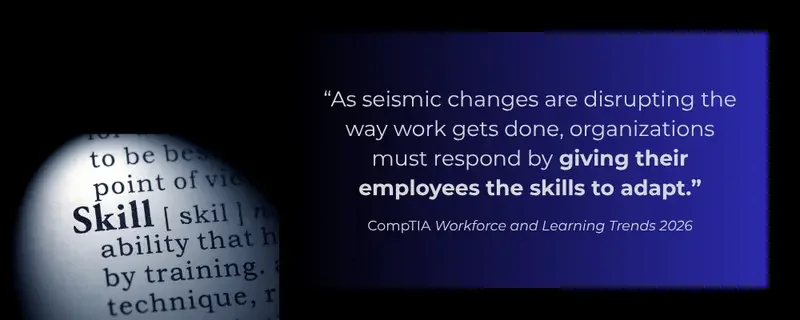
The resolution rests upon developing a structured approach to manage workloads rather than relying solely on technology or additional training.
A single, cohesive system for managing tasks can dramatically enhance efficiency and clarity.
This system should introduce order and control, facilitating smoother executions in daily activities.
By consolidating all tasks within one platform, managers can eliminate fragmented work approaches and relieve stress associated with competing priorities.
- Streamline tools by limiting them to just one—this will reduce distractions.
- Gather all tasks from varied sources and place them in the selected platform.
- Allocate actionable dates for each task rather than just due dates.
- Organize tasks by priority and view today’s action items only.
Moreover, relying on AI for insights is not yet a panacea.
For AI to be effective, it must interact comprehensively with your information landscape, which is often not feasible currently.
AI lacks human judgment, and until its connectivity evolves, relying solely on it can stall decision-making and productivity.
Moving forward, understanding your primary challenge—be it work volume or task ambiguity—can guide the path to improvement.
Your feedback is invaluable. Would you say it’s the volume of work that weighs you down, or is it the ambiguity surrounding those tasks?
Your response could help illuminate potential pathways for enhancing your work experience.
In conclusion, fostering greater productivity doesn't equate to adding more work; instead, it’s about optimizing your workflow to achieve desired results efficiently and effectively.
By focusing on managing complexity rather than simply doing more, you can reclaim time and freedom, leading to a richer professional life.


