The modern workday faces profound changes due to structural shifts, AI challenges, and workload management crises. Understanding these can help professionals adapt effectively.
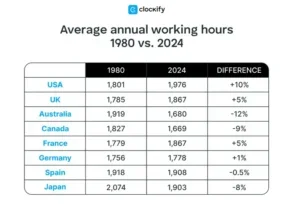
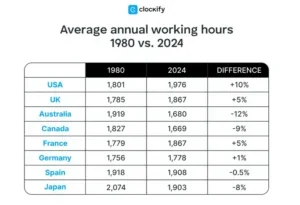
If your workday feels chaotic, fragmented, and harder to manage than ever, you’re not imagining things.
The modern workday has fundamentally changed.
A paradigm shift has occurred which makes our previously familiar work structures feel outdated.
Not long ago, work followed a predictable pattern, having a definite beginning, middle, and end.
Consider the traditional approach:
- Leaving home for a designated office space each day.
- Working through a structured morning, enjoying a lunch break, and continuing into the afternoon.
- At the day’s end, you would switch off lights, close the door, and head home, leaving work behind.
Do you remember those days?
Work was defined by place and time, while life happened elsewhere.
In the past five years, that predictable model has disintegrated.
Today, your workday is typically a jumble of messages, meetings, and notifications.
Distractions encroach on your concentration, leading to frequent interruptions.
You start one task only to be diverted to another just moments later.
Digital interruptions now extend early into the morning and late into the night, rarely ceasing.
Many professionals report feeling perpetually busy yet unable to pinpoint their accomplishments.
Thoughts like:
- “My work is never done. I always feel behind.”
- “It’s harder than ever to keep up. My work keeps showing up in different places.”
- “Work feels heavier than it used to, despite having more tools at my disposal.”
These aren’t reflections of personal failings but indicators of a broader issue—a phenomenon I term…
The Great Productivity Gap .
.
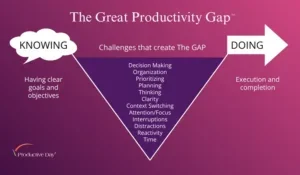
Let’s explore what I mean by this.
The Great Productivity Gap refers to the widening chasm between what we aim to accomplish and our ability to do so consistently each day.
We are entering a new era of work characterized by three intertwining forces that have drastically transformed our working patterns.
These forces didn’t appear overnight. They evolved gradually over the decades, as technology, communication, and expectations adapted the modern workspace.
What began with minor shifts during the 1970s through the 1990s has intensified into three significant megatrends.
Individually, each trend carries weight. Together, they shape a work environment like none we have previously known.
Let’s delve into each of these forces starting with…
Force #1: The Collapse of the Structured Workday
For decades, the workday maintained a recognizable structure.
I recall starting my career in the early ’90s when arriving at the office by 8:00 a.m. was the norm.
Colleagues dressed in formal attire were the standard; casual days were rare treats!
Most of us had designated offices or at least a cubicle, with a clear distinction between focused work and collaborative meetings.
Meetings occurred in designated rooms, pulling us away from our deskwork.(Do you remember what that was like?)
New work assignments could typically come from five main sources:
- Your desk inbox with papers or files.
- The fax machine.
- Phone calls.
- Meetings.
- In-person conversations.
Lunch breaks were taken in designated spaces but were structured—short yet essential.
Back then, we primarily had office phones, which we could leave behind at the end of the day. The rise of cell phones and texting wasn't prevalent yet.
Despite demanding workloads, rhythms and defined boundaries characterized the workday, leading to a definite end. After 4:30 or 5:00 p.m., we would close the office door and leave work behind.
Today, however, that structure has vanished.
The modern workday is amorphous, lacking both shape and boundaries.
The term “The Infinite Workday,” coined by Microsoft in their 2025 Work Trend Index Annual Report, encapsulates the unstructured and boundary-less nature of today’s working hours.
Workspaces have become diverse; some people remain in traditional offices, some work from home, and many alternate between the two.
Time allocations for work have also lost their rigidity. Microsoft’s research highlights that:
- 40% of employees log in at 6 a.m. to check emails and plan their day.
- By 10 p.m., nearly 30% of workers check emails again to catch up.
- Almost 20% of employees check their emails before noon on Saturdays and Sundays.
There are no longer guardrails on the workday—it feels limitless and unending.
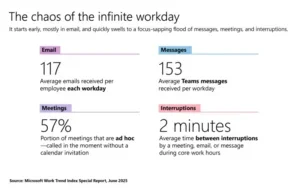
The advent of portable offices enables this shift; laptops and paperwork can be transported between locations.
Yet, the omnipresence of cell phones makes it all the more challenging, as they accompany us everywhere.
Between laptops and mobile devices housing various collaboration tools and messaging platforms, our ability to focus diminishes as notifications and requests multiply.
Today’s unstructured workday leads not just to extended hours, but also to an increased volume of responsibilities and commitments.
Virtual meetings take up more space on our calendars, being easier to set up and participate in.
The flow of work now arrives in a continuous stream rather than in manageable increments.
Consequently, professionals now react continuously instead of progressing through a defined series of tasks.
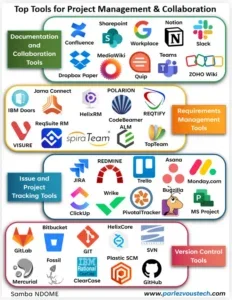
Jumping from email to IMs, phone calls, texts, documents, and live conversations hampers our ability to maintain clarity and focus.
The outcome is a workday that resembles a rushing river pulling us from morning to night, often leaving us with unfinished tasks.
The collapse of the structured workday has obliterated our balance and rendered our plans for productivity unstable.
Prioritizing tasks, protecting time, and making substantial progress is now more challenging than ever.
Next, let’s examine the role of AI in this context, which has infiltrated our work environments with promises of improved efficiency.
Is it, however, fulfilling those promises?
Force #2: The AI-Productivity Paradox
AI has become a ubiquitous presence in our lives, with its promises of simplifying work and automating repetitive tasks to allow time for more valuable activities.
Historically, every generation has incorporated AI into their routines, as illustrated by Menlo Ventures.
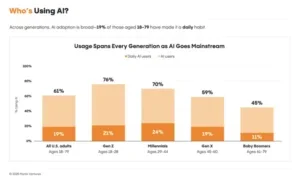
In theory, AI should enhance productivity.
However, the reality tells a different story.
Research by Aruna Ranganathan and Xingqi Maggie Ye, published in Harvard Business Review, indicates that AI tools aren’t diminishing workload; rather, they’re exacerbating it.
The study summarized that:
“In the study, employees worked at a faster pace, took on a broader scope of tasks, and extended work into more hours of the day, often without being asked to do so. That may sound like a win, but it’s not quite so simple. These changes can be unsustainable, leading to workload creep, cognitive fatigue, burnout, and weakened decision-making. The productivity surge enjoyed at the beginning can give way to lower quality work, turnover, and other challenges.”
In essence, AI was expected to transform our work lives, yet its implementation has significant repercussions.
The introduction of AI necessitates continuous learning of new tools, which places an additional burden on already stretched schedules.
Thus, it adds to the demands of a workday already packed with responsibilities.
Moreover, the rapid pace of AI development means new tools emerge weekly.
Once you master a tool, it may become outdated within months.
There’s a relentless cycle of learning without a break.
In many instances, employees spend more time mastering AI applications than executing essential tasks.
While AI improves certain task efficiencies, it can also increase post-task workloads, requiring additional time for review and corrections.
AI’s influence generates a greater volume of work overall.
Content generation accelerates. Communication frequencies rise, and with these, expectations to keep up become greater.
This indicates that AI is not streamlining productivity but amplifying the volume and pace of work—often leading to overwhelming and unsustainable workloads.
Deadlines become harder to meet, commitments feel more challenging to fulfill, and reaching expectations seems increasingly daunting.
The very tools designed to enhance efficiency may inadvertently hinder progress by complicating decision-making and increasing cognitive load.
This phenomenon is now being recognized by more organizations as the AI-Productivity Paradox.
Does any of this resonate with you?
Whether your perspective on AI is one of skepticism or optimism, there is a common understanding of the need to adapt to its current demands.
The ongoing necessity for continuous learning within an already hectic work schedule ultimately places contradictory goals at odds: keeping pace with AI developments while achieving work targets.
These pressures give rise to the final force influencing our current work environment…
Force #3: The Workload Management Crisis
The third force reflects the growing imbalance between the workload and the available time to complete it.
This issue has developed gradually, akin to a frog being slowly boiled unaware in gradually heating water, leading to a state of crisis.
This imbalance heightens stress and burnout levels annually, making job performance increasingly difficult.
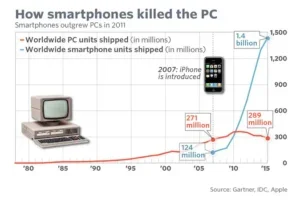
To illustrate this progression: this chart provides insight into how technology has transformed work output over time.
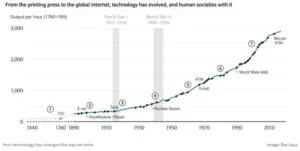
1974: “Burnout” was first identified by psychologist Herbert Freudenberger as a phenomenon within the workplace.
1990s: By this time, rapid advancements in technology, coupled with corporate restructuring and downsizing, escalated workloads and, consequently, levels of stress and burnout.
2015: Deloitte’s reports identified the “overwhelmed employee” as a critical trend within their 2014 Global Human Capital Trends.
2020: The pandemic magnified workplace stress as many transitioned to remote work, blurring the lines between home and professional responsibilities and further complicating technology use.
2025: Research suggests that 66% to 79% of employees experienced burnout, marking a substantial metric for organizational health and employee retention.
Thus, we arrive at: The Workload Management Crisis.
So, here's the reality...
The relentless speed and intricacy of modern work hinder our ability to manage the tidal wave of tasks, requests, and decisions.
Professionals are experiencing burnout since traditional methods of working are becoming ineffective.
The improvised routines may sustain productivity temporarily, but they frequently fall short of meeting set goals.
Many rely on various to-do lists, sticky notes, email flags, and countless apps that lack integration.
For example, numerous task management applications flood the market, their numbers continuing to increase.
As responsibilities multiply and become fragmented, these piecemeal systems begin to falter.
Important assignments slip through the cracks. Competing priorities vie for attention.
Workers often spend more time determining where work originates from and trying to prioritize than actually completing the work itself.
There's often confusion between merely managing tasks and pursuing actual work completion.
Thus begins the phenomenon of “the work behind the work.”
This includes task-related communication, seeking necessary information, app switching, prioritizing tasks, and checking on work status.
Such tasks consume time but don’t bring us closer to achieving the objectives for which we were employed.
Let’s unpack this further…
There are essentially two missions inherent in your workday, each requiring time—albeit not in equal proportions.
Time is needed for both executing your work and for managing how that work is accomplished, though ideally, the latter should take up minimal time.
We should ideally channel the majority of our time into actually DOING our work.
Doing work means employing your expertise. It’s about performing tasks you thrive on—uninterrupted and free from distractions.
How you work represents the systems in place which should run efficiently in the background of your day. Yet for many, this is not the case, resulting in lost time that could have been dedicated to meaningful work.
Time allocated to managing rather than executing is fueling an environment that cultivates “quiet quitting,” “task masking,” and “productivity theater.”
In summary, we’re facing a Workload Management Crisis.
When Three Major Forces Converge
Each of these trends—The Collapse of the Structured Workday, The AI-Productivity Paradox, and The Workload Management Crisis—presents its own set of challenges.
Together, they form a perfect storm.
It is a storm that many professionals find difficult to navigate.
- Days begin with the best intentions, only to be pulled into reactive work.
- By day’s end, many feel discouraged about what hadn’t been accomplished.
- Upon waking the next day, stress and demotivation loom over them immediately.
As professionals work longer hours, they still feel behind.
Juggling countless responsibilities creates an underlying anxiety of forgetting something crucial.
In their quest to keep up, they flounder in search of new techniques like life-saving devices, holding onto anything that offers hope.
However, many don’t find satisfactory solutions and continue to struggle just to stay afloat.
It is exhausting, isn’t it?
Disconcertingly, many attribute these struggles to personal failings—believing they simply lack discipline or focus—when, in fact, the issue is structural.
And that’s not your fault.
Why This Matters Now and What It Means for You
The modern workday is not only evolving; it is accelerating rapidly.
Organizations push forward at an unprecedented pace. Technological advancements occur rapidly. Expectations for collaboration, responsiveness, and output keep climbing.
Ignoring these impactful trends won’t eliminate them.
Recognizing and understanding them is essential to effectively navigate this new workday.
When these converging forces emerge, they alter not just how we work but how we live.
Closing The Great Productivity Gap necessitates a new approach to work management.
Those professionals and organizations that grasp this shift now will stand a better chance of effectively adapting.
The pivotal question is…
What can be done about all of this?
That’s what we’ll be discussing in the next Efficiency Edge. You can expect Issue #2 of The Efficiency Edge next month, along with updates highlighting new products and programs to help streamline your workday in manageable steps.
In the meantime, I encourage communication.
Which of these three forces resonates most with you currently?
Every email is read and responded to, and sharing your experiences will help shape future discussions.
That’s it for now. Until next time…
Remember to maximize your minutes, protecting time for what truly matters, and making cherished memories.
Enhanced productivity isn’t about cramming more into your workday; it’s about executing tasks more efficiently and gaining time to enjoy life.
Leslie
P.S. Should today’s discourse resonate with you, feel free to share your insights on which of the three forces impacts you the most by sending me an email.
Book Your Call: https://productiveday.com/talk/
Get Started Today: https://productiveday.com/taskology/


