Startups can create meaningful customer relationships through thoughtful web design choices focused on personalization, usability, and after-sale support.

A startup’s website acts as a critical component of its team, delivering vital information, addressing customer questions, and influencing user retention. A user-friendly, well-structured site can differentiate a startup from its competitors and foster lasting connections with customers.

While larger companies may have ample design budgets, small startups can achieve impactful results through strategic decisions regarding user interface, content layout, and customer engagement. Here’s how to navigate the essential elements of web design to connect with your target audience effectively.
Emphasizing Personalization for Better Engagement
Picture walking into a boutique where the staff is familiar with your preferences. This level of personalization significantly enhances the shopping experience and replicates the same effect online. Catering to visitor preferences instead of presenting a one-size-fits-all homepage transforms browsing from mundane to engaging.
Research indicates that personalized experiences can lead to a staggering 179% increase in purchasing likelihood. Thus, personalization should be integral rather than an added feature. Here are steps to achieve that:
- Begin with a welcome survey asking new visitors about their interests to better customize their site experience.
- Based on collected responses, modify product recommendations, homepage graphics, and subsequent communications.
- Observe which adjustments lead to sales and refine your approach over time—accuracy isn’t a requirement at the start, but a continuous refinement process is essential.
An excellent example of personalization in action is Scentbird, which offers monthly fragrance subscriptions. The site enables users to specify their preferred scents through a structured selection process, ultimately providing tailored recommendations that resonate with user preferences.
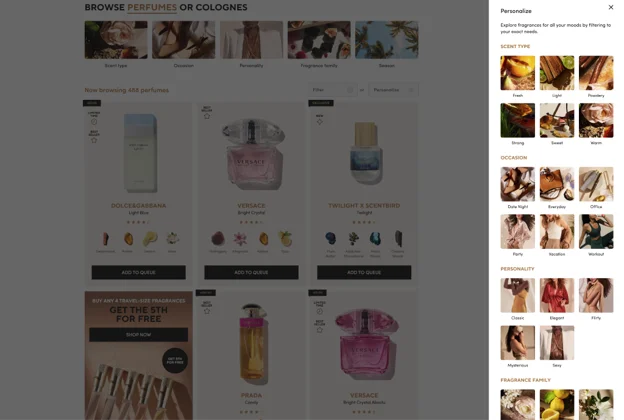
Source: scentbird.com
Contextualizing Products for User Understanding
Detailed specs often tell what a product can do, but scenarios depicting real-life use cases help customers visualize the product fitting seamlessly into their lives. Seeing relatable situations where a product is employed enhances the likelihood of purchase, as it reduces the cognitive load on the consumer to imagine its utility.
Here are strategic ways to exhibit product usage:
- Identify typical usage moments: consider the daily activities of your target customers and position your product as a solution.
- Feature relatable visuals on product pages—photos, brief videos, or illustrations that show the product in action within these contexts.
- Accompany these visuals with concise explanations detailing the problem each scene helps solve. Specific and relatable scenarios will facilitate potential customers in envisioning themselves benefiting from the product.
For instance, Spotminders showcases their tracking cards within practical contexts, featuring images of the devices being utilized in wallets and bags, thereby helping visitors understand their value more intuitively.

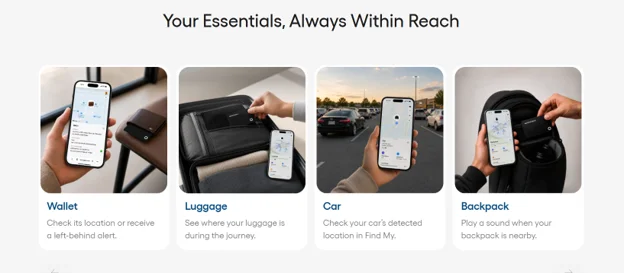
Source: spotminders.com
Encouraging Customer Input Enhances Engagement
A more engaged customer feels invested in their purchase, which is particularly valuable in personalization-focused industries. When customers are actively involved in defining their product, they cultivate a deeper connection with what they are buying.
Custom product configurators can lead to significant conversion boosts—20-40% in many instances. Here’s how to introduce customization on your platform:
- Divide customization into manageable segments rather than overwhelming users with choices all at once.
- Guide users through iterative selections—type, size, material, or any relevant attributes.
- Provide immediate previews of choices, allowing users to visualize their customizations in real time.
- Include an optional comments section for customers to share unique specifications or desires for their products.
An effective model is seen with Icecartel, which allows customers to sequentially craft their customized jewelry from selecting styles to colors. This seamless process empowers customers and enhances their direct involvement, which fosters loyalty and satisfaction.
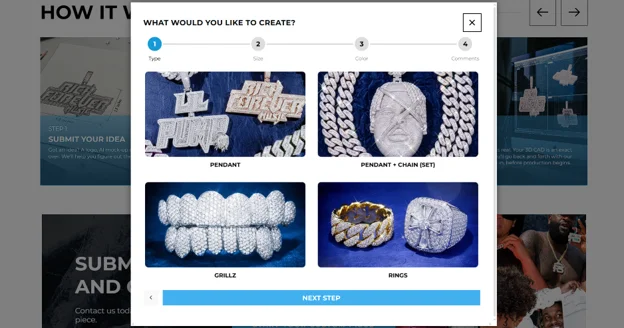
Source: icecartel.com
Prioritizing Self-Service for Enhanced Customer Support
After completing a sale, many founders overlook the potential of a website as an ongoing resource. Yet, a high number of customers revisit sites post-purchase seeking answers regarding shipment details, billing queries, or product usage instructions. If the support isn't readily available, customers may feel frustrated, leading them to abandon the brand entirely.
To ensure your site is a continuous support tool:
- Document frequently asked questions your support team deals with.
- Create clear, concise articles organized by topics like order inquiries, billing, product usage, and troubleshooting tips.
- Avoid jargon and ensure the language is approachable.
- Incorporate a search function for faster access to information.
- Regularly update articles based on product adjustments or policy changes.
The brand Pendulum exemplifies this approach through its help center, which covers various topics essential for both prospective and current customers. By establishing an accessible resource, they create a workflow that serves both acquiring new customers and retaining existing ones.
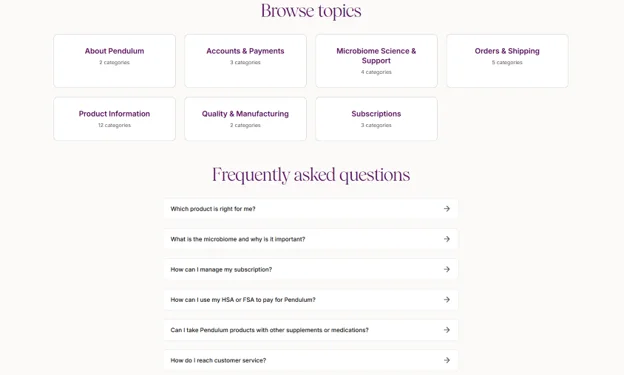
Source: pendulumlife.com
Creating Account Features to Drive Repeat Engagement
Encouraging customers to register for accounts rather than allowing single-use checkouts has significant benefits. Repeat interactions rely heavily on the information retained by these accounts, allowing businesses to continue nurturing relationships.
With an account, customers can enjoy seamless experiences through features that store preferences, order histories, and saved payment methods. This leads to repeated sales rather than isolated transactions. Steps to implement effective account features include:
- Implement order histories and stored payment/shipping details to streamline repeat purchases.
- Add a “saved items” or wishlist feature for products that customers may consider later.
- If applicable, incorporate simplified reordering processes for consumable products, enabling quick restocks without starting from scratch.
- Integrate loyalty program tracking into accounts, showcasing points and rewards directly within user profiles.
By incorporating these functionalities, you provide compelling reasons for customers to choose your site for future purchases, rather than abandoning their carts elsewhere.
Concluding Insights for Long-lasting Connections
The majority of customers won't communicate the reasons behind their departure from a site; they’ll simply exit. Recognizing this silent feedback is pivotal for improving your web design.
Make it your mission to identify and resolve at least one inefficiency on your site this week. It could be streamlining the checkout process or improving access to order histories for returning clients. Such adjustments can make a world of difference in retaining customers.
Startups can thrive by paying attention to details that larger companies might overlook. Utilize analytics to identify the pages with the highest exit rates and design solutions that cater to the visitors who almost engaged. Those areas represent opportunities for forging deeper connections.
Image by tonodiaz on Magnific
The post Building a Website That Fosters Strong Connections with Customers appeared first on StartupNation.