AI can speed up planning and admin work, but teams still need leaders who spot strain, build trust and adapt plans to real conditions.
AI can turn meeting notes into summaries, organize information and produce a first draft of a project plan. Those tasks save time. They don’t resolve the problems that most often derail work: unclear communication, weak stakeholder support, missed risks, unrealistic schedules and a lack of leadership.
That distinction matters for any team bringing AI into project management. Software can process the information it receives, but people still have to decide whether that information reflects the situation on the ground. A polished plan can look convincing and still fail if it ignores team capacity, competing priorities or relationships that are starting to fray.
Use AI for support, keep judgment with the team
AI can help with the administrative load of running projects. It can sort rough notes, summarize long email threads, improve drafts, prompt brainstorming and handle repetitive work. It can also generate a charter or roadmap quickly, giving a project lead a useful starting point.
The risk comes when a team treats that output as a decision. A tool may match a task to someone whose calendar shows enough available hours. A human manager may know that person has spent weeks dealing with urgent problems on another launch and is already stretched. Availability on a schedule doesn’t always equal capacity to take on more work.
That gap is where leadership comes in. Managers need to check the assumptions behind assignments, plans and timelines, then adjust them to fit the people doing the work. AI can help prepare the material for those decisions; it can’t take responsibility for making them well.
People give early warning signs
Project risks aren’t limited to patterns in historical data. A stakeholder may stop responding as quickly. Two colleagues may be in quiet conflict. A client contact who was engaged may become distant. These signals can be hard to capture in a task tracker or past project records, yet they can shape whether work stays on course.
A project leader who pays attention to those changes can ask what’s happening and act before a small issue grows. That means noticing more than deadlines and status reports: the quality of conversations, shifts in participation, and whether people appear to have room to do their work.
In one project described by its manager, a key team member resigned midway through the work. The manager had seen signs for weeks and had prepared a contingency plan. The team shifted responsibilities, avoided disruption and kept the project on track. The useful lesson is practical: risk planning works best when it includes what people are showing you now, not just what a model estimates from past information.
Plans need buy-in and local context
A project plan coordinates people with different priorities, communication habits and concerns. Producing a roadmap doesn’t create a shared commitment to deliver it. Teams still need clear expectations and a common understanding of the intended outcome. When morale drops or a roadblock appears, a leader may need to reconnect people with the goal and resolve confusion about what happens next.
AI-generated plans also have a context problem. A tool may not know that one department is at odds with another, that an approval commonly takes three weeks, or that team members are already handling more work than they can reasonably absorb. It may produce a tidy six-month schedule without accounting for any of those realities.
That doesn’t make the draft useless. It means someone familiar with the organization has to examine it. Check its timing, dependencies and assumptions against how work actually gets done. If the plan depends on an approval, a person or a stretch of capacity that isn’t available, revise it before the team commits.
Set clear boundaries for AI’s role
For project leaders, a workable division of labor is straightforward: use AI to reduce clerical effort, and use human judgment to steer the project. Start with tasks that have clear inputs and outputs, such as cleaning up notes or summarizing a long discussion. Review the result before sharing it, especially when the summary could influence a decision or set expectations.
For planning, treat generated schedules and roadmaps as drafts. Ask whether they reflect the team’s actual capacity, dependencies and stakeholder priorities. For risks, pair data based estimates with conversations and observations from the people close to the work. For assignments, consider workload and well-being alongside calendar availability.
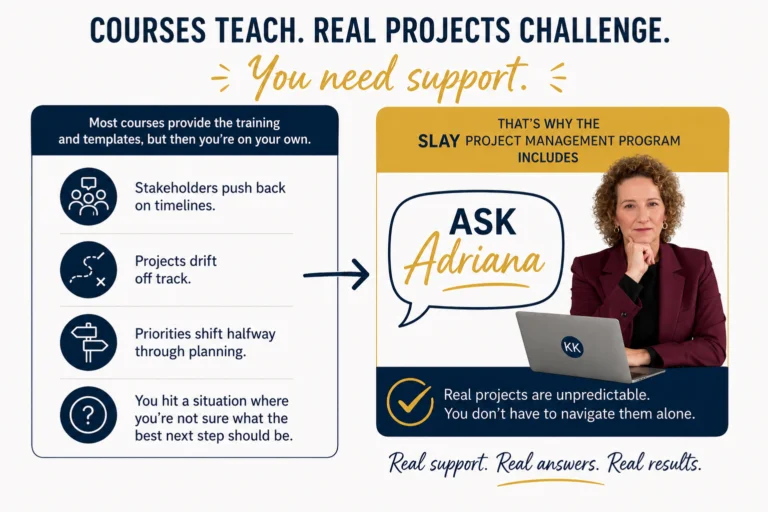
The project management course SLAY, created by the article’s speaker after coaching thousands of students, focuses on practical skills such as starting projects with clarity, gaining stakeholder support, managing risks and leading with confidence. Its emphasis reflects a broader operational point: useful templates and tools can provide structure, but teams need leaders who can apply that structure to their own circumstances.
AI can make project work faster and help teams organize information. Whether that time saving turns into better delivery depends on what leaders do with it: test the plan, listen for early signs of strain, build commitment and adapt as conditions change. The strongest results come when automation handles routine work and people remain accountable for the decisions that move a project forward.