Founders and revenue teams compared notes on activation, AI, pricing and growth across seven cities, with customer conversations at the center.

Product-led growth gets harder as a company expands beyond individual signups. Teams need to connect product use with customer needs, help buyers choose how they want to engage, and decide which measures show whether growth is healthy. Those questions shaped ChartMogul’s PLG Growth Lab, a roadshow across seven cities that put practitioners’ experiments and unresolved challenges at the center.
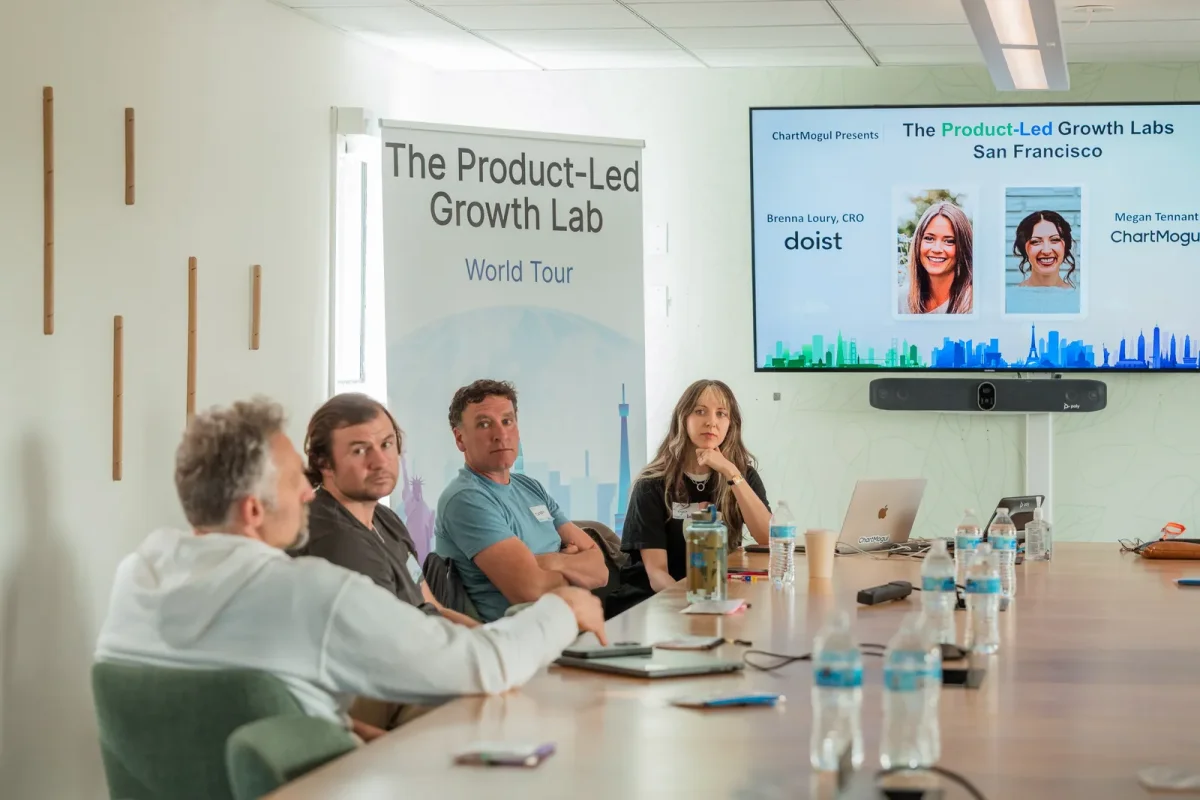
The series began with a simple aim: hear from people doing the day-to-day work, rather than relying on stories about distant success. ChartMogul brought customers and other operators together in San Francisco, Šibenik, Paris, London, Warsaw, Utrecht and New York. Each stop took a different route into the practical details of building and growing a product-led business.
Turning individual interest into team adoption
In San Francisco, during Stripe Sessions, Brenna Loury, chief revenue officer at Doist, joined a workshop on moving upmarket. A large company signing up can look like a major opportunity, but an individual on an entry-level plan is still far from a broad rollout or a larger contract.
The discussion focused on the work between those two points: when to bring in sales, how to help an enthusiastic user build support among colleagues, and what kind of team can guide a wider deal to completion. These are connected challenges. A product may attract users on its own, but expanding adoption inside an organization calls for a clear path from one person’s interest to a team’s shared need.
Loury spoke candidly about the difficulties, and attendees added lessons from their own companies. The conversation carried on over rooftop drinks after the workshop ended.

Making growth operations more human
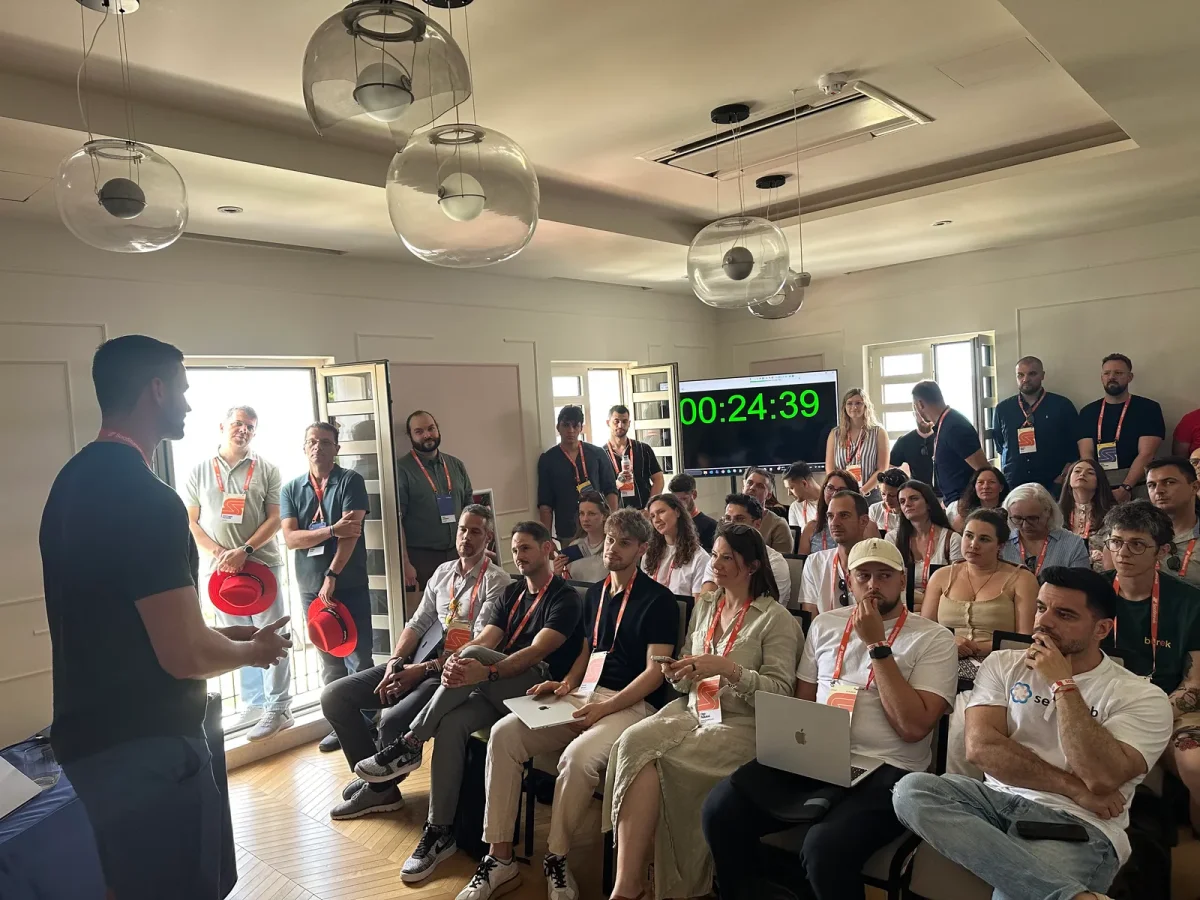
Šibenik, where ChartMogul partnered with SaaStanak for two afternoons of sessions, went deeper into the mechanics of product-led growth. The program covered data, activation, retention, expansion and pricing, with speakers examining what companies can learn from product behavior—and what those signals leave out.
Tom Andrews demonstrated how an automated upsell depends on connecting product usage, customer and billing data. Aleksandra Korczyńska pointed to the limits of behavioral data: a customer who hasn’t upgraded could be missing a feature, waiting for budget or struggling to get started. The activity record alone can’t explain which. Asking customers directly can fill that gap.
Activation came up from both the product and the user’s point of view. Wes Bush urged teams to consider the outcome someone can get before asking them to learn an interface. Paulina Spaccarotella focused on whether users feel understood, capable and confident enough to continue. Together, those perspectives make activation a question of delivered value and user confidence, not simply completed steps.
Kyle Poyar and the article’s author led a workshop on the growth levers that matter as businesses move from $1 million toward $20 million in annual recurring revenue. The discussion covered retention, expansion and pricing, along with the improvements companies need as they scale. ChartMogul published a full recap of the Šibenik sessions, including practical takeaways and presentation decks.
Testing a different sales model
At the Paris stop, hosted by Guideflow, Lisa Heiss and Benjamin Cahen joined a conversation about activation, monetization and AI’s effect on product experiences. Cahen, CEO of Wisepops, described an early experiment to move from self-serve sales to a fully sales-led approach. That meant considering what it would take to stop offering free trials and freemium signups that supplied leads, and ask prospective customers to speak with sales instead.
Changing the route to purchase affects both customers and the team serving them. The experiment raised practical questions about how a company can make a large shift while keeping the reasons for it clear to the people carrying it out. A small team that understands the thinking behind a bet may be better equipped to work through its consequences.
Heiss brought the discussion back to trust in AI products. Speed matters, but users also need to understand the output and feel confident in it. As software takes on more of the work, teams still have to make expertise visible and help customers judge the result. The event continued with informal conversations about what attendees were building and where they were getting stuck.
Letting buyers choose how to engage
In London, founders and revenue leaders from Intruder, Physitrack, CharlieHR, Utility and other companies discussed onboarding and the different ways people prefer to evaluate a product. A familiar trial flow asks for a user’s role and company size, then sends them through a planned sequence of features and messages. That can help some buyers, but it assumes everyone wants the same kind of guidance.
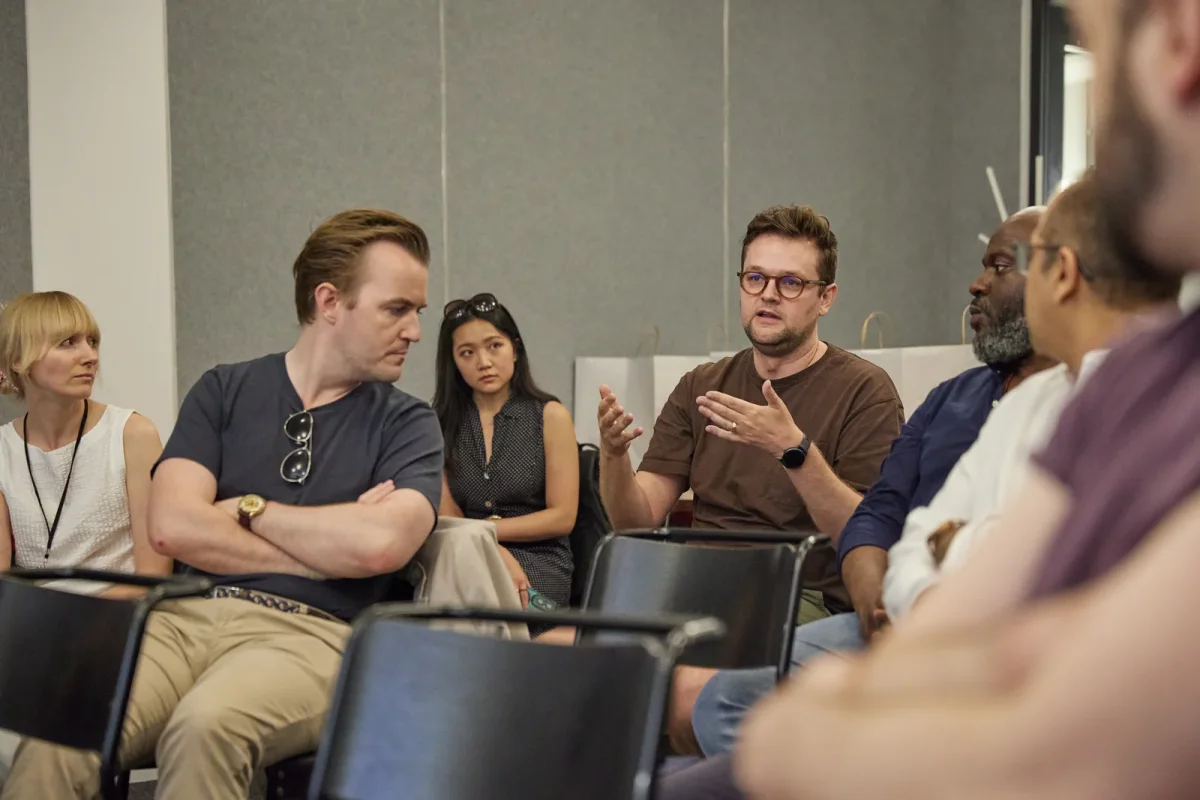
Some people would rather explore independently. Others want to talk to someone before deciding. The article’s author said they often call the number on a company’s website first, especially when they already understand the product category and want answers quickly. That initial interaction also offers a glimpse of what support might feel like after purchase.
The group considered whether AI could help vendors learn what a buyer wants at signup. A person might ask to explore without follow-up, or request a conversation with a sales representative to resolve a few questions. If the company listens and shapes the next steps around that preference, it can make the buying process more relevant to the customer.
Measuring whether AI delivers value
Warsaw hosted the group in an old movie theater, where attendees ate popcorn while discussing AI features and their pricing. Olga Padulosi and the Survicate team hosted, with Piotr Cygan, Krzysztof Szyszkiewicz, Daniel Korczynski and Wojtek Strzałkowski on the panel.
A central question was how to tell whether an AI feature works. Usage data can show that someone tried it, but it can’t establish whether the output helped. Teams need to examine what the system produced, ask users for feedback and talk with customers about the result.
That kind of direct observation also builds product judgment. Faster development doesn’t remove the need to decide what deserves to be built or what good looks like. Customer conversations, support tickets, bug investigations and feedback that doesn’t fit neatly into a dashboard all give teams evidence to make those calls.
The panel also considered what makes a product hard to copy. Sound architecture and cost-effective delivery matter, as do the judgment and experience of the people building it. Access to the same AI tools doesn’t mean every team will produce the same quality of product. Attendees drew on years of experience in Poland’s tech scene, and the discussion ran past its scheduled end. A video was also referenced at the event.
Explaining a product before a category exists
In Utrecht, Wolter Rebergen and Claudiu Murariu joined a discussion about attribution and marketing a product in a category customers may not yet recognize. Teams can spend considerable time refining their positioning and still leave prospective buyers unsure whether the product fits their needs. The challenge is to explain the job the product does in language people can connect to their own work.
Murariu also made a practical point about attribution: it has become easier and less expensive to connect marketing data with what customers do in a product and what they pay. No measurement setup will capture every recommendation made in a private group chat or over dinner. A consistent view can still help a team make better spending decisions. Past a certain point, another debate about first-touch and last-touch attribution may be less useful than putting a marketing effort into the world.
Murariu described the roadshow itself as an exercise in product-led thinking: work out what would make the event useful to attendees, then build around that. It echoed the series’ original purpose of making time for people’s actual questions.
Connecting team work to company health
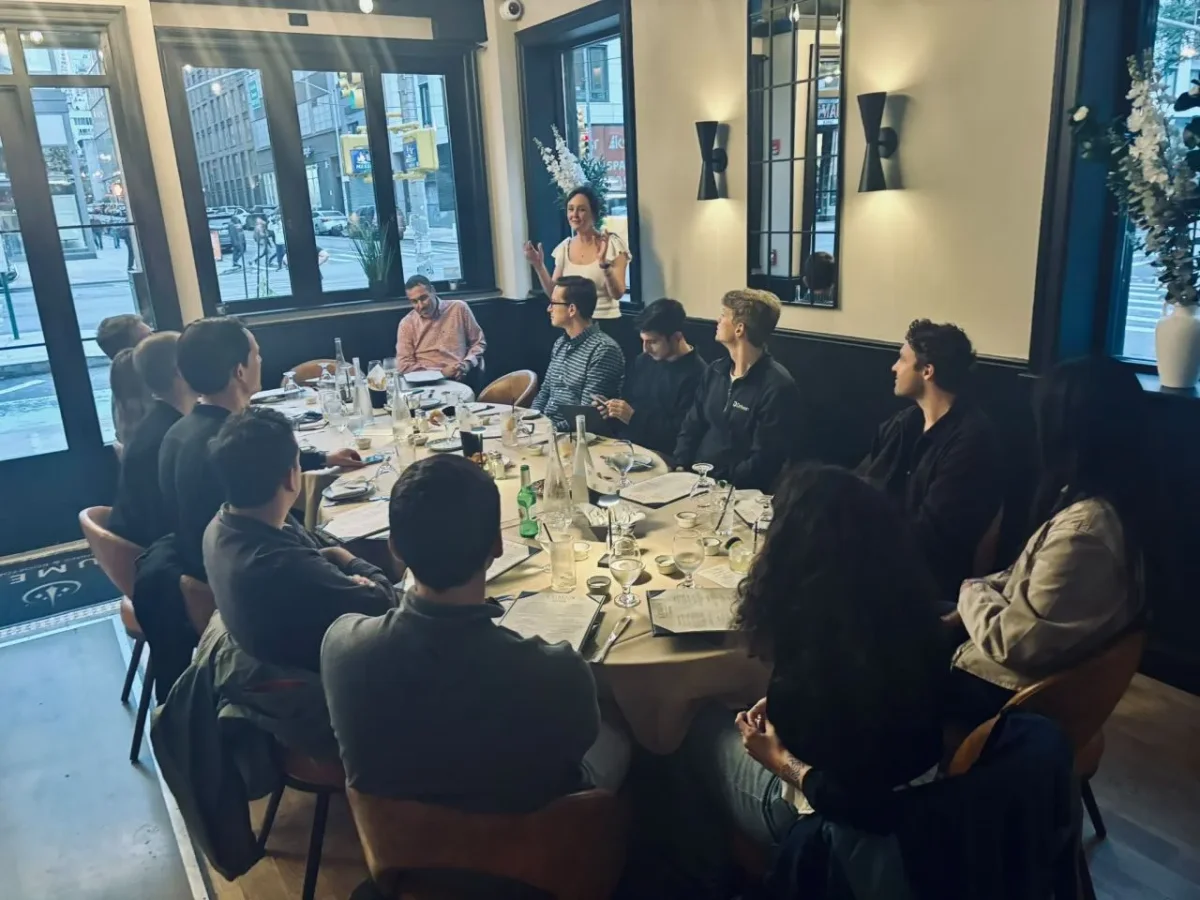
The final stop was a dinner in New York during Pavilion’s GTM Summit, with 18 founders and executives around the table. ChartMogul’s VP of Customer Success, Ingmar Zahorsky, joined the gathering, which included both returning attendees and people new to the series.
At the summit, the author spoke about three measures that can help teams understand business performance: monthly recurring revenue growth rate, net revenue retention and customer acquisition cost payback. The underlying point applies across the roadshow’s discussions: employees can hit their own targets while the company’s growth stalls. Giving teams a view of growth, retention and acquisition costs helps them connect their work to the business’s results.
Across seven cities, the most useful exchanges came from people sharing what they had tried, asking difficult questions and helping peers reason through familiar problems. For founders and operators, the practical takeaway is to pair product data with direct customer contact, make room for different buying preferences, and connect team goals to measures of company health.