The NRF projects 4.2% holiday sales growth to $1.013 trillion, while retailers plan seasonal hiring near last year’s level.

Holiday retail sales are forecast to pass $1 trillion in 2026, but the outlook comes with a practical challenge for retailers: preparing for stronger spending while households face uneven cost pressures. The National Retail Federation (NRF) projects that sales in November and December will rise 4.2% from the same months in 2025, reaching a total of $1.013 trillion.
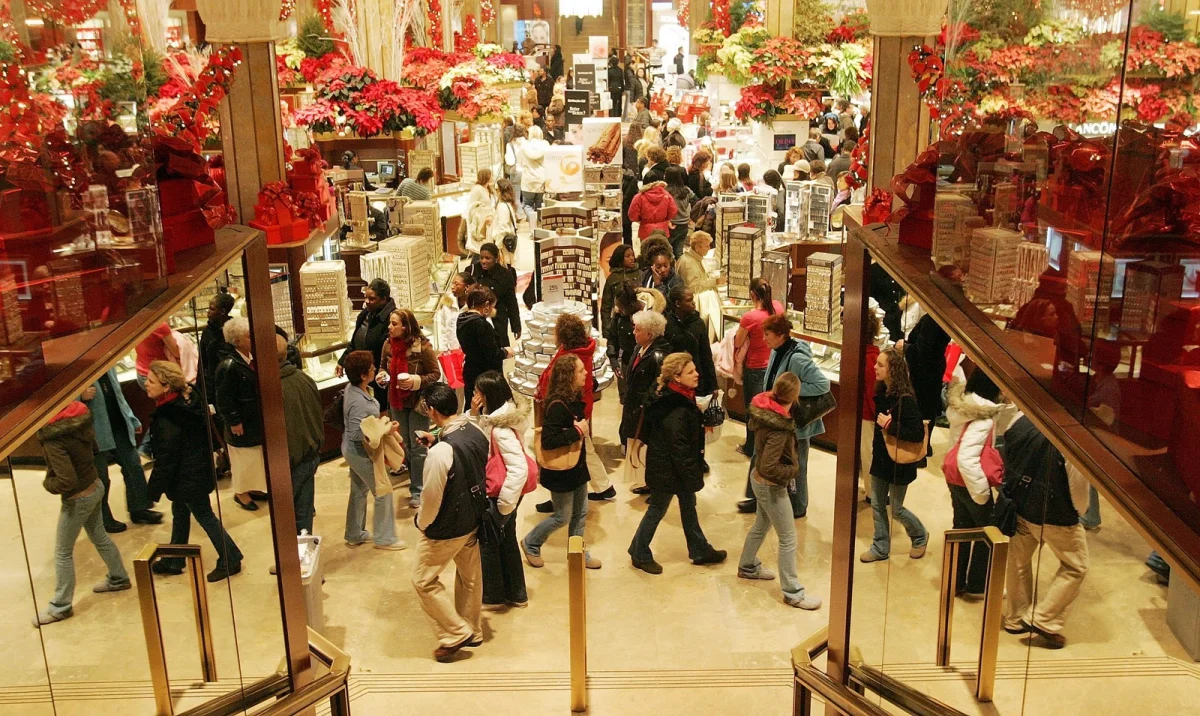
The projection points to faster growth than last year, when holiday sales increased 3.1% over 2024 and totaled $972 billion. For business owners, the figures offer a broad demand signal, not a promise that every store or product category will see the same result. The forecast covers core retail sales across the two month holiday period, so local customer behavior and a retailer’s own sales mix still matter.

Spending expectations meet household pressure
NRF President and CEO Matthew Shay said the group expects consumers to make holiday spending a priority while keeping an eye on their budgets. He said retailers are prepared to compete through pricing, value and choices for different budgets. That description puts price and assortment at the center of the season: shoppers may continue spending, but businesses will need to give them reasons to feel that a purchase fits their means.

NRF Chief Economist and Executive Director of Research Mark Mathews described spending as having strong momentum, with consumers remaining a bright spot in the economy. He also pointed to inflation, higher gasoline prices and pressure on household spending as factors that affect income groups differently. That unevenness is important for operators reading a national forecast. A strong aggregate number can coexist with customers who are more selective about what they buy, when they shop and how much they spend.

For retailers, the useful takeaway is to treat the projection as context for planning rather than a substitute for store level evidence. Recent sales patterns, inventory movement and customer response to prices can help show whether broad seasonal expectations are taking shape in a particular business. The source forecast doesn’t provide a breakdown by category, region or income group, so it can’t answer those questions on its own.

Seasonal staffing remains measured
NRF expects retailers to hire between 325,000 and 375,000 seasonal workers for the 2026 holiday period. That range is broadly in line with the estimated 356,000 seasonal jobs from last year. The forecast suggests that retailers expect to staff for holiday demand, while keeping hiring within a restrained range.

NRF says higher gasoline prices, persistent inflation, higher interest rates and elevated consumer debt are contributing to a cautious approach. Those pressures create a familiar operational balancing act: businesses need enough people to handle busy periods, yet they face uncertainty about how much demand will materialize. Seasonal hiring gives retailers added capacity during a defined period, but the reported range does not specify how individual companies will allocate roles or hours.

Owners can use the staffing estimate as a reminder to align labor plans with the work the season creates. Customer service, order handling and store coverage can all become harder to manage when demand rises. The source doesn’t give a hiring timetable or prescribe a staffing model; each retailer’s needs will depend on its operations. What the national estimate does show is that seasonal hiring is expected to remain close to last year’s scale even as projected sales growth accelerates.
What the forecast measures
NRF says its estimate uses economic modeling that incorporates consumer spending, disposable personal income, employment, wages, inflation and prior monthly retail sales releases. Its calculation excludes automobile dealers, gasoline stations and restaurants, focusing instead on core retail. NRF defines the holiday season as Nov. 1 through Dec. 31.

That scope matters when comparing the projection with other sales figures. The $1.013 trillion estimate applies to the specified two month period and NRF’s definition of retail; it shouldn’t be read as a measure of all consumer spending. The forecast also describes expected sales growth across the sector, not the performance of a particular retailer.

NRF’s Winter Holiday FAQ and Winter Holiday Headquarters provide additional details on its holiday figures. For business operators, the clearest signal is a season expected to be larger than last year, paired with continued pressure on household budgets and a measured staffing outlook. Planning around that mix means watching actual customer demand as the season unfolds and keeping pricing, product choices and staffing responsive to what customers do.