Effective lead generation should focus on quality, not quantity. Learn strategies to minimize acquisition costs by targeting high-intent customers and improving messaging.
Lead generation can drain resources, but increasing spending often isn't the solution. For founders and small marketing teams, it's crucial that every dollar invested generates prospects that are not just leads but potential buyers. By refining lead quality, businesses can gradually decrease acquisition costs. Statistics show that companies with effective lead nurturing strategies produce 50% more sales-ready leads at a 33% lower cost. The aim is to attract the right audience, qualify them promptly, and allocate marketing budgets where they yield the highest impact. Here’s how to effectively lower customer acquisition costs without compromising lead quality.
1. Target High-Intent Customers
When budgets are limited, focusing on individuals who have already displayed a buying intent is the quickest route to minimize acquisition costs. A targeted audience that shows a strong purchasing inclination can outperform a broader group with only casual interest. Founders often fall into the trap of chasing cheap clicks rather than seeking customers that fit their profile best.
- Concentrate on high-intent keywords rather than generic awareness terms.
- Utilize channels where customers actively assess products, such as Google Search, AI-driven searches, review sites, and specific community platforms.
- Implement retargeting strategies for visitors who viewed products or abandoned their shopping carts before venturing into new audience expansions.
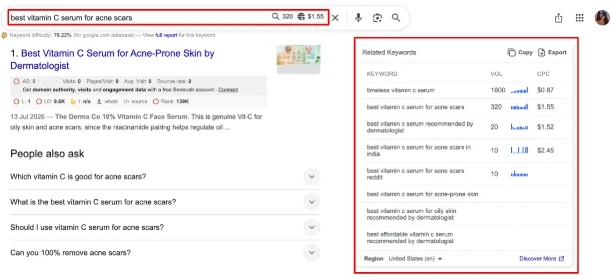
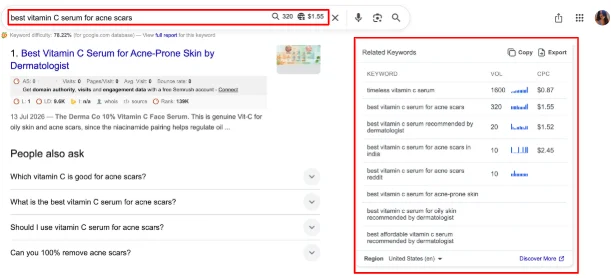
Consider a direct-to-consumer skincare brand; instead of running broad campaigns on platforms like Instagram targeting skincare enthusiasts, focus the budget on Google searches such as "best vitamin C serum for acne scars." Although traffic may be lower, visitors are more likely to convert due to their clear purchase intent, thereby resulting in fewer wasted clicks and a lower acquisition cost per customer.
2. Optimize Messaging Before Increasing Ad Spend
Prior to augmenting your advertising budget, it’s essential to evaluate the messaging on your landing pages. If your communication fails to promptly address why customers should choose your product, investing in more traffic will only exacerbate the issue. Strong messaging is vital for helping qualified visitors recognize how your product resolves their problems.
Examine your landing pages from the customer’s viewpoint. Ask yourself: Does the landing page headline align with your ad’s promise? Can visitors grasp the benefits swiftly? Is it clear how your product distinguishes itself without requiring extensive scrolling? Even minor enhancements to your messaging and website experience can lead to increased conversions without additional ad spending.
Take a look at Glossier’s product page for its Balm Dotcom: it features multiple product images, ingredient details, a straightforward three-step usage guide, and over 10,000 customer reviews.
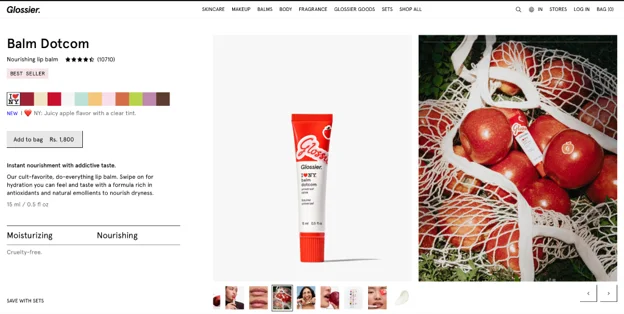
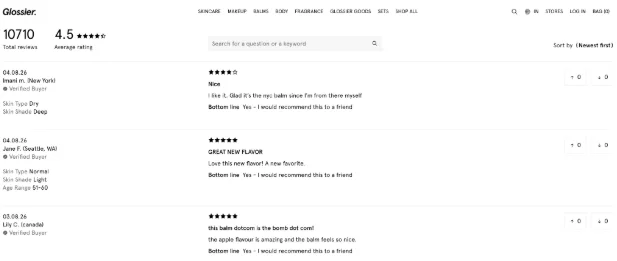
This page efficiently provides shoppers with answers to common questions, facilitating an easier transition from curiosity to purchase. Identifying and removing friction points before acquiring additional visitors is crucial.
3. Build Trust Before Seeking Conversions
Customers often don’t make a purchase the first time they encounter a brand, emphasizing the need to cultivate their trust before pushing for conversions. As customer-related content, such as product descriptions and responses to reviews, increasingly utilizes AI, thorough human oversight is necessary to ensure clarity, accuracy, and brand voice consistency.
- Provide evidence at every stage of the buying journey.
- To ensure consistent customer engagement, equip your team with a learning management system to help everyone articulate your brand’s value uniformly from marketing to customer support.
Trust is fostered through consistent messaging across all touchpoints, including customer reviews, user-generated content, product demonstrations, transparent pricing, FAQs, guarantees, and robust return policies. Ruggable excels at this; their product pages include detailed visuals and room layouts, allowing customers to filter and read hundreds of verified reviews for each item.
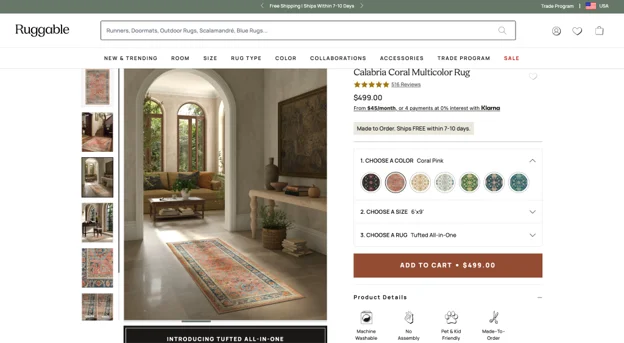
Shoppers can find information on washability, sizing, and care upfront, reducing uncertainties prior to purchase. By implementing similar techniques, you can alleviate concerns without overhauling your entire online store. Consider these effective tactics to improve your eCommerce sales:
- Substitute generic product images with authentic, real-world photos
- Position customer reviews prominently on the page
- Address common objections to ease the load on your support team
- Clarify shipping, return, and care information
- Test which trust indicators significantly influence conversions
4. Feed Ad Platforms High-Quality Signals, Not Just Bigger Budgets
Ad platforms optimize their outreach based on the conversion tracking events you've defined. If you set your tracking to identify email sign-ups, these platforms will seek out users who tend to do just that, resulting in a low customer acquisition cost and a dashboard that appears healthy, but lacks engagement potential.

When performance declines, many founders tend to increase budgets or modify creative assets rather than revisiting campaign settings to check conversion events. This often overlooked aspect can be the most uncontrolled lever in media buying.
Before increasing your ad spend, here are three elements to consider:
- Refine your conversion event to occur closer to revenue. Optimizing based on actions like "add to cart" directs the platform to target browsers. In contrast, optimizing for purchase or bookings signals a focus on buyers.
- Send purchase values, not just counts. If a platform recognizes that one order totals $40 while another is $300, it can adjust its target accordingly. Without value distinction, all conversions seem the same, prompting algorithms to pursue the cheapest options.
- Monitor outcomes post-sale. Keeping track of refunds and repeat purchases sends vital signals. Neglecting this monitoring leads the algorithm to optimize for customers who may return products.
Ray-Ban exemplifies effective signal utilization; by combining the Conversions API with the Meta pixel, they achieved a 36% broader reach on Facebook and Instagram, a 19% reduction in cost per thousand views, and a 7% decrease in cost per conversion. Utilizing better data enhances advertising efficiency.
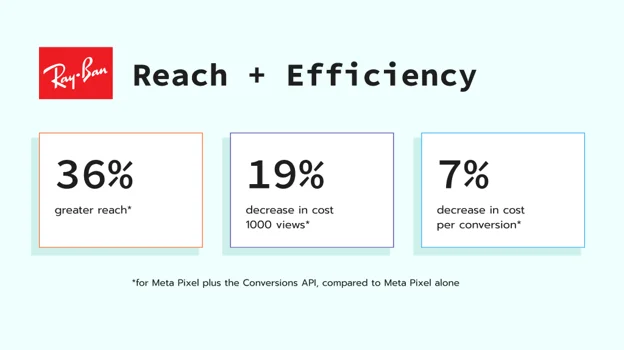
The takeaway is to ensure that your campaign sends signals that reflect the outcomes that matter to your business.

5. Measure Lead Quality Beyond Acquisition Cost
A low customer acquisition cost can be misleading. If those leads aren’t converting into paying customers, what’s the value? Focusing solely on lead generation costs obscures the broader picture. The goal should be to attract individuals who will purchase, return, and drive long-term revenue streams.
As you scale, deepen your metrics beyond clicks and cost per lead. Track the number of leads converting to qualified opportunities, those completing purchases, and which acquisition channels consistently yield your highest-value customers. Often, a channel with a higher acquisition cost may result in stronger conversion rates and a better return on investment over time.
Keep in mind: don’t optimize for cheaper leads; instead, aim for higher-quality customers.
For instance, Jones Road Beauty faced rising customer acquisition costs through paid social. Instead of merely attempting to lower their Meta cost per click, they ventured into connected TV campaigns.
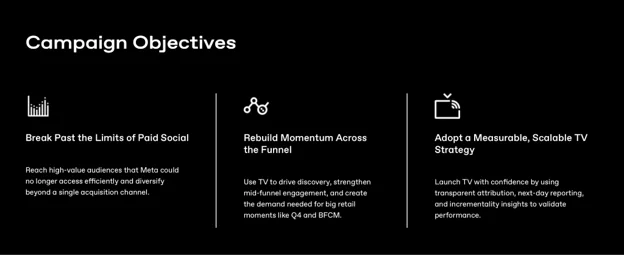
After initiating their TV campaigns, the brand saw increased site traffic, improved Meta performance, and a significant boost in branded searches. Some in-store customers reported discovering the brand via TV ads first. By expanding their performance metrics, Jones Road Beauty identified channels that attracted qualified audiences while enhancing overall business performance.
6. Utilize Existing Customers as the Most Cost-Effective Channel
Founders often manage acquisition and retention with separate budgets, with retention often falling short. However, monitoring repeat purchase rates is essential since referrals from satisfied customers incur no additional media costs and can lead to higher trust levels.
Here are a few actionable strategies:
- Request referrals at moments of peak customer satisfaction, immediately after a delivery or first use, instead of waiting for a future newsletter.
- Ensure the incentive is attractive enough to inspire sharing—simply offering a 10% discount isn’t memorable.
- Leverage your best customers to generate creative content—photos and reviews they produce can enhance paid campaigns.
- Provide unique experiences or "shareable moments," such as personalized packaging, handwritten notes, or a smooth return setup.
Zerodha, India's largest stock brokerage, integrated this model before it even had customers. Initial tools on their site included a brokerage calculator and a referral calculator that demonstrated the potential earnings from bringing new clients. Founder Nithin Kamath estimates that referrals account for nearly a quarter of new business, with some estimates suggesting it could be as high as 40% when factoring in indirect referrals.
His rationale for foregoing ads altogether is particularly insightful. Once you've invested a substantial amount to acquire a customer, the pressure to recoup that investment can lead to decisions that aren't in the customer's best interest, potentially harming long-term relationships.
Final Thoughts
Improving results doesn't always necessitate a larger budget; often, refining decision-making with existing traffic brings valuable improvements. Begin by auditing a single acquisition channel instead of attempting to overhaul everything at once. Review your top-performing landing page from a first-time shopper's perspective and make necessary adjustments in content. Then analyze your analytics to determine which channels yield converting customers, rather than simply the lowest cost per click. Incremental enhancements in these areas can build over time, helping to attract high-quality customers without escalating ad expenditures.
For further strategies tailored for founders, start here; start now.
Image by DC Studio on Magnific
The post How to Lower Customer Acquisition Costs Without Sacrificing Lead Quality appeared first on StartupNation.