Sales battlecards are vital tools for maximizing effectiveness in pitches. This guide covers their creation, uses, and examples to sharpen sales tactics.
Sales battlecards might not be familiar to everyone, yet those who implement them recognize their importance in enhancing sales conversations and effectiveness. Much like flashcards used in studying, battlecards distill critical information into concise, accessible formats, empowering sales teams during pitches.

This comprehensive guide will delve into what sales battlecards are, their significance, how to create them, and exemplary templates, ensuring that you and your team are fully prepared for any sales engagement.
What Is a Battlecard in Sales?
A sales battlecard serves as an essential reference during client meetings, helping sales professionals stay composed and informed amidst challenging questions or objections. These cards summarize vital information pertaining to a sales pitch and typically consist of the following elements:
- Product Overview: A succinct description of your product's purpose and main features.
- Target Market: Identification of the ideal customer for your product.
- Customer Pain Points: Insights into the specific problems your product addresses.
- Key Benefits: The value additions provided by your product.
- Key Features: Detailed descriptions of the essential characteristics of your product.
- Competitor Comparison: An understanding of how your product stands against its competitors.
- FAQs: Prepared answers to common objections or questions.
- Pricing: Essential pricing details and subscription information.
- Specs: Any needed technical specifications.
- Conditions for Closing: Guidance on how to effectively close a sale.
Various battlecards may emphasize different categories based on the product type and market. For example, B2B products may require a focus on departmental efficiencies, while others might address specific competitor claims to aid in overcoming objections during sales conversations.
Why Are Sales Battlecards Important?
The versatility of sales battlecards makes them valuable in multiple scenarios. Let’s explore a few contexts where battlecards can enhance your sales efforts:
Preparing A Pitch
Having a battlecard on hand can keep your pitch organized and reassure you that you're prepared. While it's advisable to avoid sharing battlecards with potential clients—especially if they contain sensitive competitive data—having this tool aids in maintaining focus during discussions.
Keeping Ahead Of The Competition
Regularly updating your battlecards ensures you're aligned with competitor activities. For instance, if a competitor releases a new software product, you may need to adjust your battlecard to emphasize your product’s superior value while hinting at future upgrades, thus arming you with the confidence to discuss competitive advantages.
Learning A New Product Or Market
In complex industries, retaining all product details can be challenging. A well-crafted battlecard acts as a succinct reference to memorize or quickly access during discussions, bolstering your credibility when engaging clients.
Addressing Objections
If you encounter common objections around pricing or product value, battlecards can equip you with counterarguments. Being prepared with answers—especially when market conditions are tough—can significantly impact your pitch’s success.
Situation Specific Battlecards
When you recognize specific conditions before a pitch, customizing a battlecard with relevant information becomes crucial. For example, if you know the client uses a competitor’s product, create a battlecard highlighting your product’s superior features and anticipated objections, helping you engage more effectively.
Product Comparison Battlecards
This type of battlecard is invaluable when your product competes with popular alternatives. Consider including a comparison chart detailing features and benefits, while preparing responses to vulnerable areas where your product might lag. Using battlecards for phone or email communications can also provide clarity without exposing sensitive information to clients.
In essence, battlecards are your go-to tools, designed to arm sales teams for effective selling by enabling them to:

- Provide accurate and relevant information
- Keep track of terminology, facts, and figures
- Favorably compare your product to competitors
- Address customer pain points effectively
- Counter common objections and FAQs
- Guide through the sales process, including when to walk away or close
For more complicated sales scenarios, you might find it beneficial to have multiple battlecards focused on distinct aspects. For example, one could cover specifications while another focuses on competitor analysis. It’s essential for these cards to be easy to navigate, helping your team avoid confusion during client interactions.
How to Make a Sales Battlecard
Effectively creating a sales battlecard involves a defined process. Here’s how to approach it systematically:
Step-by-step Process
- Gather product information from your development team.
- Collect relevant market research and insights about buyer personas.
- Collate competitor insights and highlight key takeaways.
- Prepare comparison charts matching your product against competitors.
- Talk to customer service staff for feedback about existing customers.
- Obtain up-to-date pricing and product specifications.
Once you have amassed this data, it’s time to distill it down to essential points. Use highlighters or digital snippets to isolate the most relevant information, then condense this data into bullet points—keeping clarity and brevity at the forefront.
Next, categorize this bullet point information into logical sections, such as product information, market details, competitor analysis, etc. Consistency in formatting across the battlecard will facilitate quicker retrieval during pitches.
Finally, test the battlecards through role play sessions to gauge their efficacy and gather feedback from your salesforce. Making revisions based on this feedback ensures the battlecards serve their intended purpose effectively. Once finalized, roll them out across your sales team and adjust as needed based on continual changes in the business environment.
Sales Battlecard Template Examples
Understanding the flow and content of battlecards is fundamental. Below are a couple of practical template examples that illustrate different approaches:
An example battlecard for corporate health insurance could look like this:
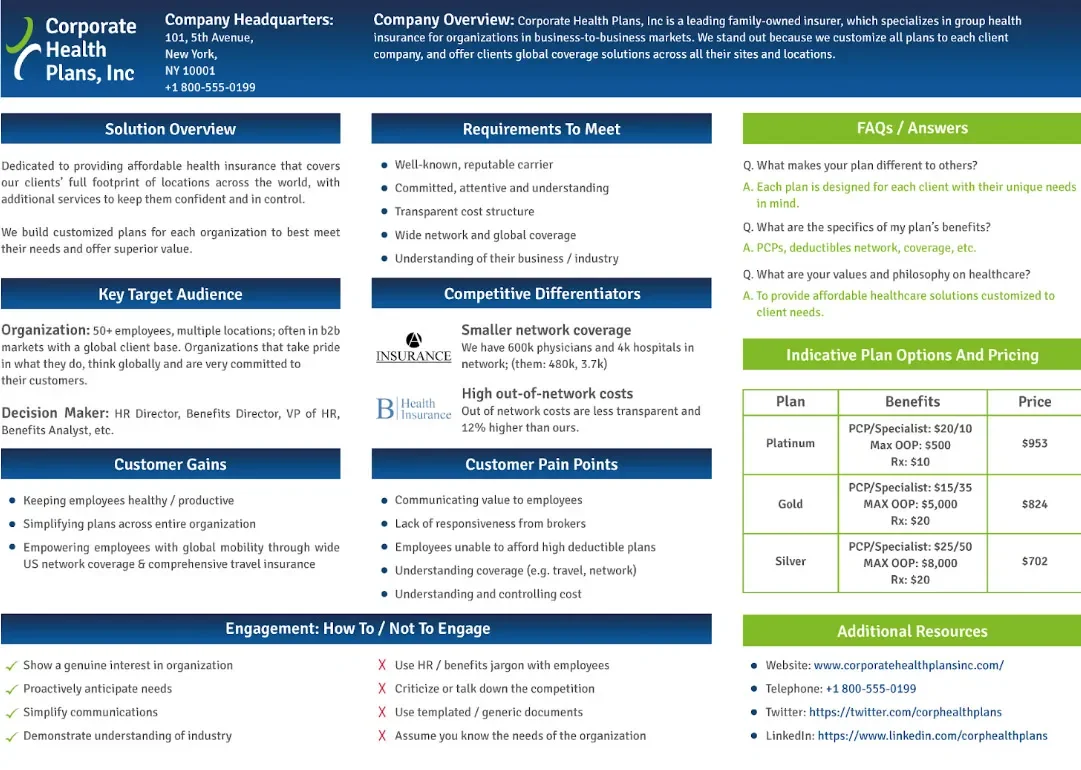
This card emphasizes solution overview, target audience, key competitors, and highlights customer pain points. Moreover, it offers guidance on continuing or abandoning a sale, along with a resources section for quick reference.
Another product-based card could resemble the following, designed for internal use only:
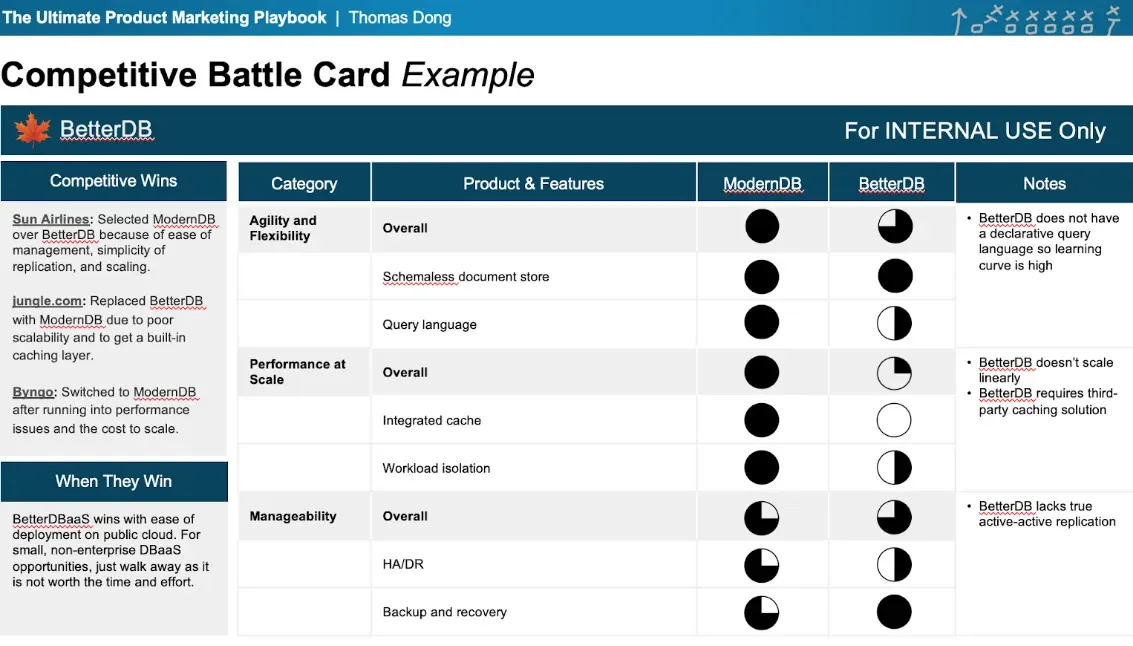
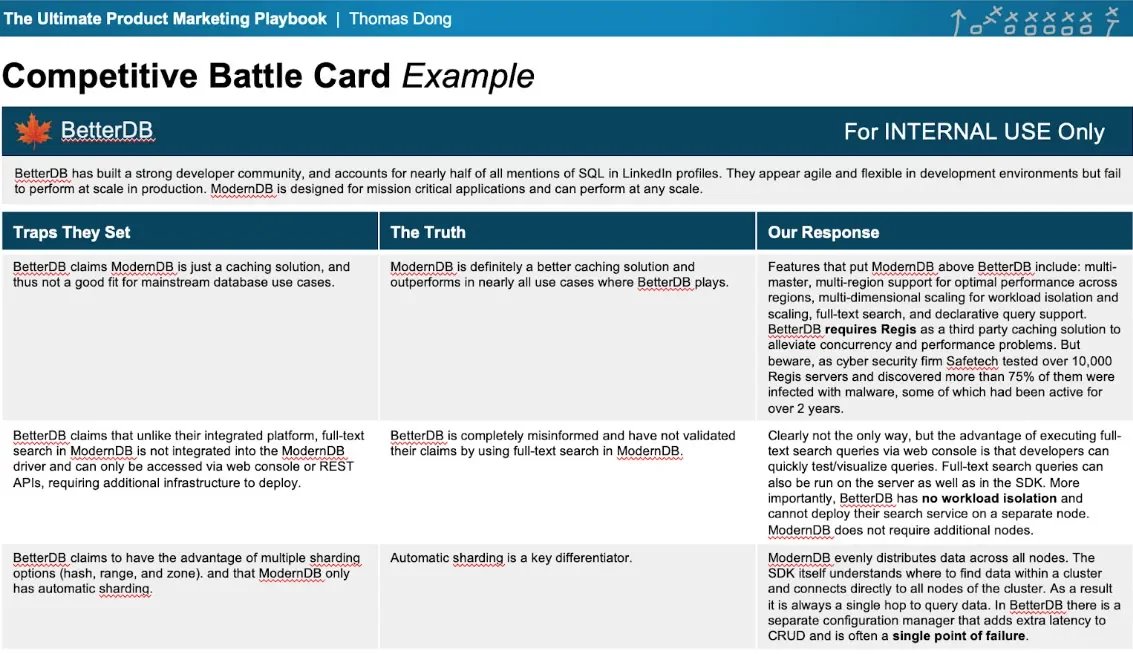
This card details competitor comparisons and sales messaging, addressing strengths and weaknesses for the product in question. The layout offers qualitative details, enabling reps to precisely address concerns raised by prospects.
Lastly, consider this template that digs into competitor claims while allowing space for notable facts and performance metrics:
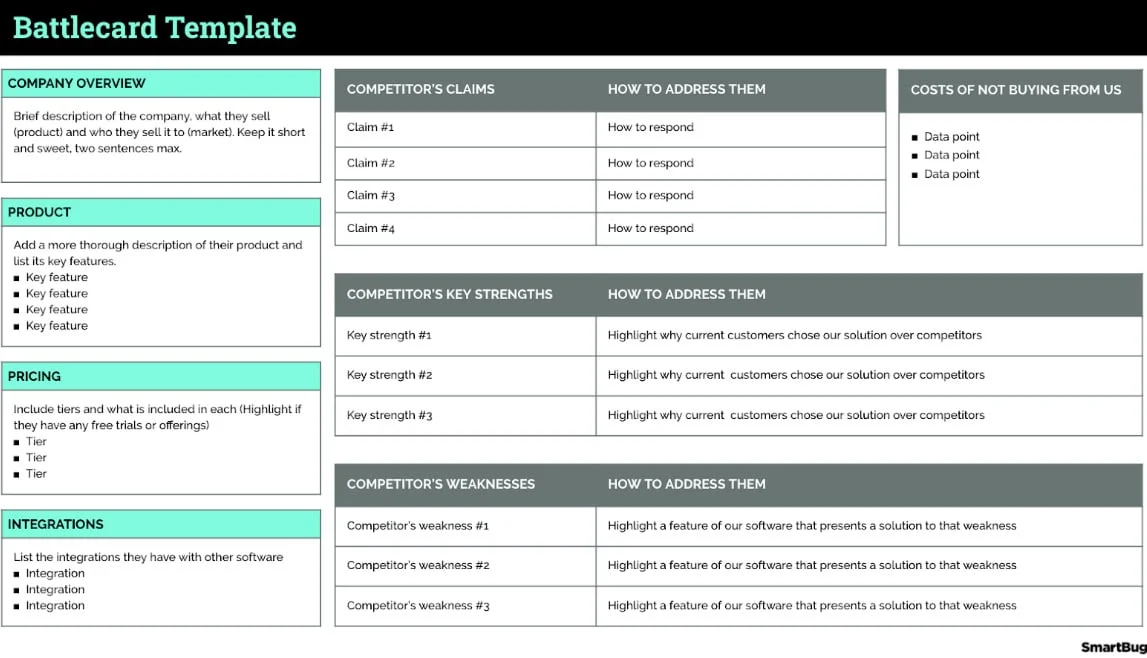
As you adopt and adapt your battlecards, ensure they have a logical flow and are easily navigable. They should encompass all critical data while being regularly updated to reflect any changes in pricing, products, or competitive landscapes.
In Conclusion
Sales battlecards are formidable tools for enhancing sales performance in various environments, especially during virtual or telephonic meetings. Their effectiveness, however, hinges on the accuracy and relevance of the information contained within them. Frequent updates are crucial to maintaining their utility as market conditions evolve.
By treating battlecards as a living document, and incorporating regular revisions into your sales strategy, you and your team can uphold consistency and improve overall sales outcomes in your endeavors.
For additional support around sales training or to inquire about enhancing your sales strategies, please reach out to us. We're here to help you optimize your sales approach and elevate performance.
Happy Selling!
Sean

Sean McPheat
Managing Director
MTD Sales Training


