Sales funnels are key to converting leads into customers. This guide breaks down the stages of a sales funnel and effective strategies to optimize them.
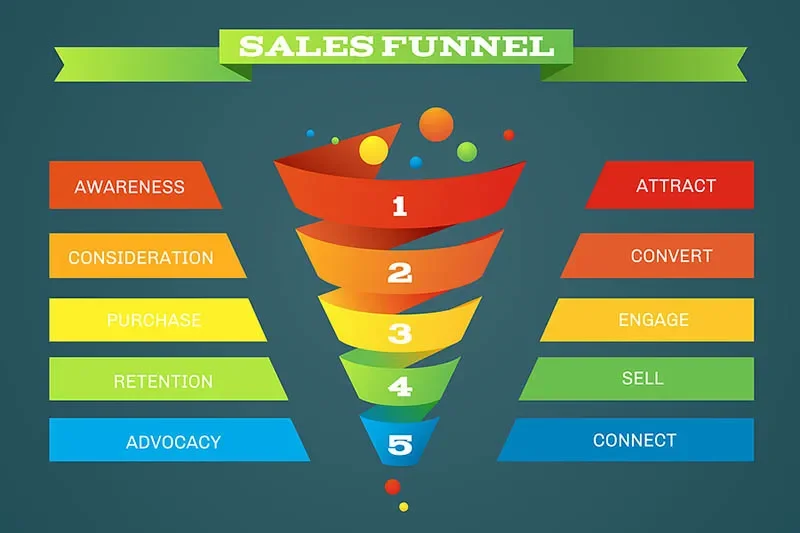
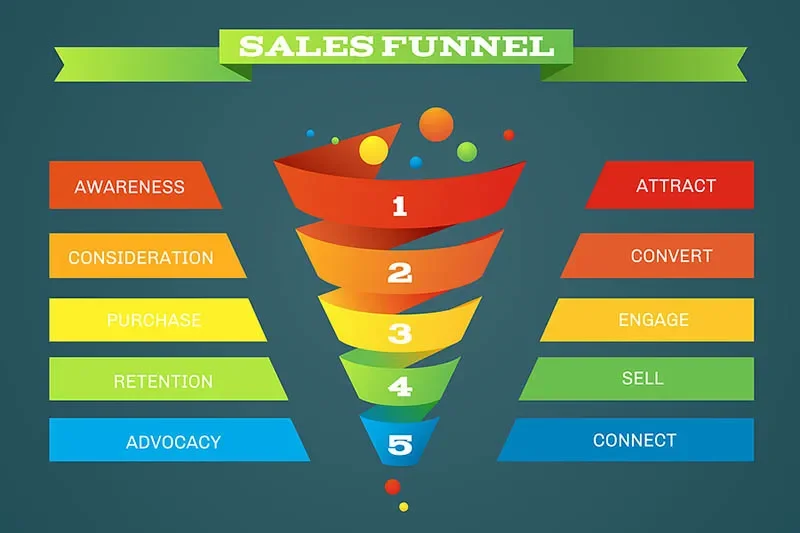
Sales funnels are integral to any effective sales strategy. Yet, many business owners are still uncertain about their structure and purpose. In this guide, we’ll clarify what a sales funnel is, outline its primary stages, and present strategies for optimizing each stage to enhance your sales performance.
What is a Sales Funnel?
A sales funnel visually represents the journey a potential customer takes from first coming into contact with your business to making a purchase. This funnel illustrates the various stages customers pass through, from awareness to eventual conversion, and emphasizes the importance of guiding them effectively through each part of the process.
Sales funnels may range in complexity, reflecting different business models and strategies. However, at their core, most funnels display similar stages characterized by a natural flow. Let’s examine two basic examples—one from the B2B sector and another from retail.
B2B Sales Funnel Example
Consider a scenario where a company is evaluating new software. The process begins with the prospect researching solutions and reaching out for discussions—this marks the initial stage. After identifying a few suitable vendors, the prospect requests proposals and pricing, moving to the next stage. This is followed by presentations from selected vendors, and finally, the prospect chooses a software provider, transitioning from lead to customer.
Retail Sales Funnel Example
Now picture a consumer shopping for jeans. The first stage occurs when they explore online options but decide they prefer an in-store experience. They visit their favorite store, select several pairs to try on, create a shortlist, and finally make a purchase. Each step illustrates a movement through the sales funnel, culminating in a transaction.
The Sales Funnel Stages
While some sales funnels may have intricate, multi-step paths with over a dozen stages, most can be distilled into four fundamental phases. Understanding these stages can help you tailor your approach effectively.
The key stages include:
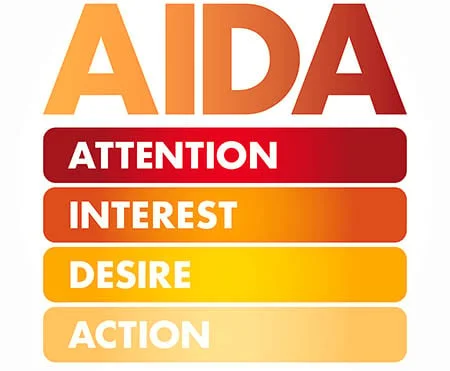
1. Attention
Capturing attention in a crowded marketplace is no easy feat. The initial stage focuses on grabbing the prospect’s interest through various channels, such as advertising, engaging social media interactions, or compelling content. Effective techniques for achieving this include eye-catching ads or impactful cold calls. The goal here is to stand out and draw potential customers into the funnel.
2. Interest
As potential customers move into the interest stage, they engage in research, comparing your offerings to competitor products. During this phase, your business should aim to facilitate their decision-making by providing valuable insights rather than pushing for an immediate sale. Sharing educational content and responding to inquiries can help align your solutions with their needs.
3. Decision
This stage is crucial, as customers narrow their options and evaluate what you offer against competitors. Your task is to articulate clearly why your product or service stands out. Factors like pricing, benefits, and customer experience play a significant role in helping prospects make their final choices. This is where understanding your differentiators can help convince potential customers to choose your offerings.
4. Action
Ultimately, converting the prospect into a customer involves them taking action. This could mean finalizing the purchase or signing a contract. For online transactions, a clear call to action is vital. Consider also the upsell opportunities at this point—encouraging additional purchases can enhance your revenue stream.
Importantly, the funnel doesn't conclude at the sale; follow-up strategies are essential for maximizing customer lifetime value and promoting ongoing engagement with your brand.
Sales Funnel Examples
To illustrate how sales funnels operate in practice, let’s analyze two distinct examples—one focused on telesales and the other utilizing online advertising.
Example 1: Telesales Funnel
In this scenario, a team of telesales representatives initiates calls to 500 decision-makers to set appointments. This results in five completed sales, with two additional upsell transactions. By examining their operations, sales managers can pinpoint areas for improvement and measure effectiveness effectively.
| Sales Funnel Stage | Ratio |
| Calls to Appointments | 10% |
| Appointments to Proposal | 60% |
| Proposal to Closed Won | 17% |
| Closed Won to Up-sell | 40% |
| Overall Calls to Closed-Won | 1% |
Improvement areas for this team could include optimizing call timing, enhancing initial engagement techniques, and ensuring the right questions are being asked to facilitate progress through the funnel stages.
Example 2: Online Advertising Funnel
This next example involves capturing leads through Google Ads and directing them to a landing page. The sales team assesses the leads to qualify them based on the M.A.N criteria—Money, Authority, Need. Qualified leads are then sold on demos of the software offered. Overall, for every 100 leads, the conversion to sale occurs five times.
| Sales Funnel Stage | Ratio |
| Leads to Qualified Lead | 40% |
| Qualified Lead to Demo Set | 50% |
| Demo Set to Closed Won | 25% |
| Closed Won to Up-sell | 20% |
| Overall Leads to Closed-Won | 5% |
Optimization areas could include refining ad content for better lead qualification, analyzing demo conversion rates, and ensuring upselling opportunities are maximized.
How to Create a Sales Funnel
When developing a sales funnel, businesses should design it from the perspective of the buyer rather than forcing prospects into a pre-defined structure. Understanding how customers make purchasing decisions enables you to create a funnel that aligns with their expectations and paths.
It's essential to continuously measure performance at each stage to identify where adjustments are needed. Using a CRM system can facilitate this process, providing analytics that highlight opportunities for improvement. Regularly reviewing this data ensures your approach evolves in alignment with market demands.
Sales training programs can further help optimize your funnel management, equipping your team with the skills necessary for successful engagement.
In summary, understanding the intricacies of your sales funnel, along with optimizing its various stages, can drive not only improved conversions but also customer retention and satisfaction. Happy Selling!

Sean McPheat
Managing Director
MTD Sales Training

The post What Is A Sales Funnel & The Main Funnel Stages? appeared first on MTD Sales Training.


