A Roth conversion can reduce future tax pressure, but income effects, IRA balances and timing determine whether the tradeoff pays.

A Roth conversion shifts retirement money from a tax-deferred account into a Roth account, bringing a tax bill into the present in exchange for potential tax-free growth and qualified withdrawals later. The planning challenge is choosing when, and how much, to convert: the income added today can affect the rest of a tax return, while the future benefit depends on tax rates, time and retirement needs.

That makes conversions a timing decision, not a default move. A year with unusually low income may create room to recognize income at a lower rate. A conversion in a high-income year, by contrast, could make the immediate cost outweigh the expected benefit. The same strategy can suit one household and work poorly for another.
What changes when money moves to a Roth
Traditional retirement accounts generally defer tax: contributions may be deductible, investment growth is not taxed as it accumulates, and distributions are generally taxed as ordinary income. Roth accounts use a different sequence. Contributions are made with after-tax dollars, and qualified withdrawals can be tax-free.

When pre-tax money is converted, its taxable portion is generally included in income for that year. The account’s future treatment changes, but so can the household’s current tax picture. The conversion amount may affect adjusted gross income, tax brackets, credits, deductions and other calculations tied to income. Looking only at the retirement account misses those interactions.
The central comparison is between paying tax on the converted amount now and paying tax on withdrawals later. If a person expects a higher tax rate in retirement, recognizing income at a lower rate now may be attractive. If the expected future rate is lower, a conversion may add cost without enough offsetting benefit. Those expectations are uncertain, so the decision needs to account for the person’s circumstances and time horizon.

Regular conversions and the pro-rata calculation
A traditional IRA-to-Roth IRA transfer is commonly called a regular Roth conversion. When the traditional IRA contains only pre-tax money, the converted amount is generally taxable. A mix of deductible and nondeductible contributions makes the calculation more involved.
After-tax contributions create basis, meaning the portion of the account that has already been taxed. But a person generally cannot select only that basis for conversion while leaving all pre-tax dollars behind in other traditional IRAs. The pro-rata rules spread basis across the person’s non-Roth IRA balances, including traditional, SEP and SIMPLE IRAs. The taxable share is calculated from the overall picture rather than from a preferred slice of one account.

Consider an IRA funded with a $4,000 deductible contribution and a $6,000 nondeductible contribution. If the account is now worth $12,000, the basis is $6,000 out of the original $10,000 contributed. The source example describes $4,800 of the current value as pre-tax and therefore taxable on conversion; the broader lesson is that the calculation depends on basis and total IRA value, not on which dollars the account holder intends to move.
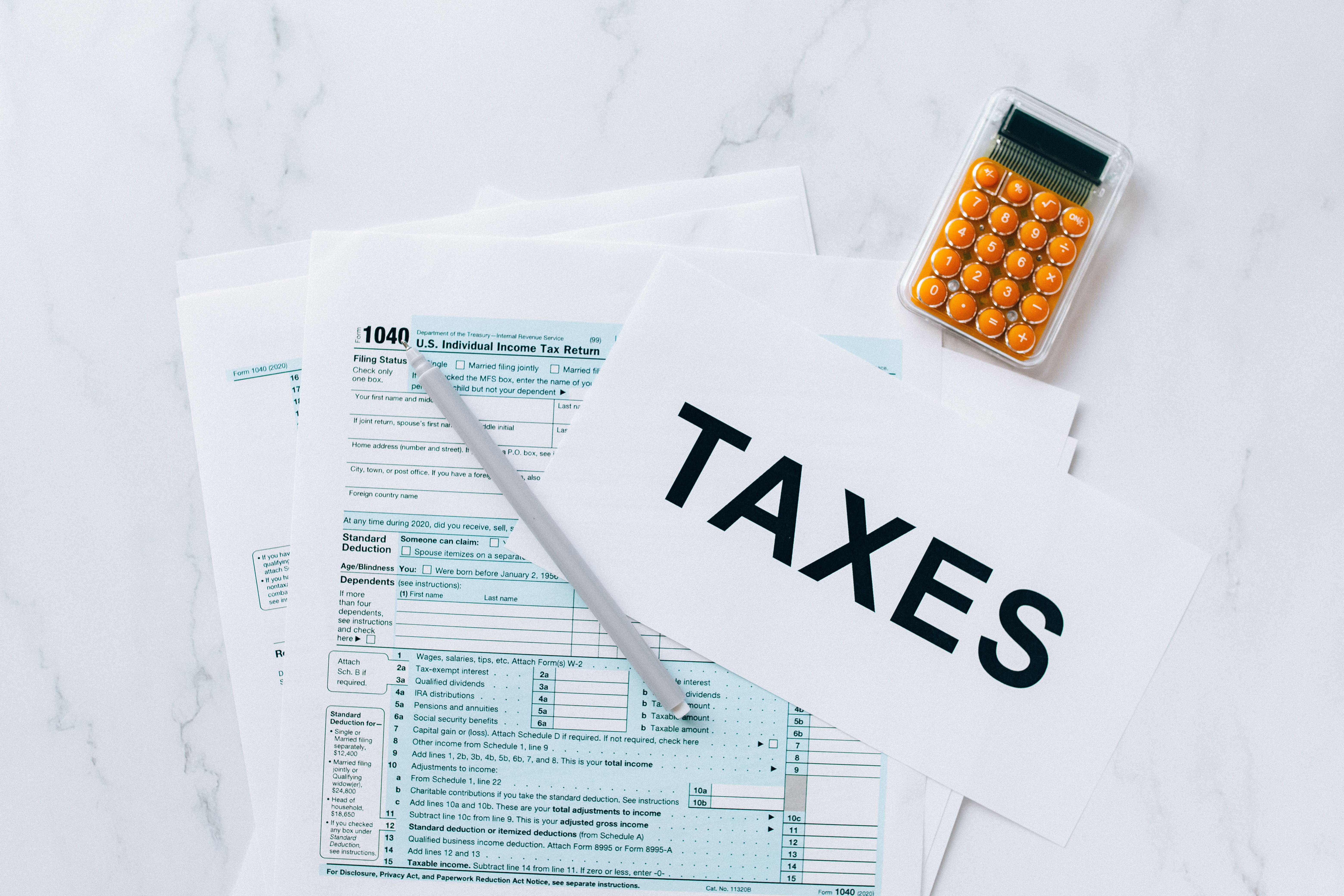
This distinction matters for anyone who has contributed after-tax money and later assumes that amount can be converted tax-free on its own. Other pre-tax IRA balances can change how much of a conversion is taxable. The records for nondeductible contributions also need to be maintained: IRS Form 8606 tracks IRA basis and helps calculate the taxable portion. Missing or inaccurate reporting can lead to an incorrect tax result or make it harder to establish basis in later years.

Backdoor and mega backdoor Roth approaches
A backdoor Roth is an informal name for making a nondeductible contribution to a traditional IRA and then converting it to a Roth IRA. It is often considered by people whose income is above the limits for direct Roth IRA contributions. It does not, by itself, eliminate tax on a conversion.
If the person also has pre-tax money in traditional, SEP or SIMPLE IRAs, the pro-rata calculation can make part of the conversion taxable. The approach tends to be simpler when there are few or no other pre-tax IRA balances. Form 8606 is central to tracking the nondeductible contribution and reporting the conversion’s taxable and nontaxable portions.

The mega backdoor Roth uses an employer retirement plan rather than relying only on IRA contributions. It usually involves making after-tax contributions within a plan, such as a 401(k), then moving eligible funds to Roth treatment through a conversion or rollover. The potential contribution amount can be larger than under a regular IRA contribution strategy, but the plan must permit the necessary after-tax contributions and movement of funds.
Plan terms shape the result. Some plans do not accept after-tax contributions; others do not permit the withdrawals or distribution structure needed to move the money. Earnings on after-tax contributions may also receive different treatment from the contributions themselves. Under some qualified-plan arrangements, after-tax amounts and associated earnings can be directed to Roth and traditional destinations, respectively, if the plan’s options and applicable rules support that split. The details need to be checked against the specific plan rather than assumed.
Why people consider converting
Potential tax-free growth is one reason. Once money is in a Roth account, future growth may be withdrawn tax-free when the account’s requirements are met. The longer the funds remain invested, the more time that treatment has to matter, though investment performance is not guaranteed.
Another reason is managing taxable income across years. A person may have lower income during early retirement, a business slowdown, a sabbatical or a year with unusually large deductions. A conversion in such a year can bring income forward into a period when the tax cost may be lower than it would be later. The amount converted still matters: recognizing too much income at once can move the household into a higher bracket or affect other tax calculations.
Traditional accounts can also require distributions later in life. Roth IRAs do not impose lifetime required minimum distributions on the original owner, giving that owner more control over when to draw on the account. Converting some traditional assets before required distributions become a major part of income may reduce future distribution pressure, although a conversion does not remove a distribution that is already due.
Estate plans can be another factor. Heirs may receive a Roth account with more favorable tax treatment than a large pre-tax traditional IRA, provided the Roth rules are met. Inherited accounts still have distribution requirements, and the right approach depends on who will inherit the account and whether the owner expects to spend the assets or leave them to others.
Timing, age and ability to pay
Conversions often warrant a closer look when current income is relatively low, future income or tax rates may be higher, and the money can remain invested for years. The case can also be stronger when the tax bill can be paid from funds outside the retirement account. Using retirement funds to cover the tax reduces the amount that remains invested in the Roth.
Age alone does not settle the question. Younger account holders have more time for potential tax-free growth to offset the cost of conversion. Someone in midlife may have a case if income is expected to rise or if managing later tax brackets is a priority. Older account holders can still benefit, but a shorter time horizon gives the conversion less time to make up for the tax paid at the outset.

A conversion may be less appealing when the person is already in a high tax bracket, expects a lower rate later, needs the funds soon or would have to use retirement savings to pay the tax. A large balance in other pre-tax IRAs can also make a backdoor strategy less tax-efficient because of the pro-rata calculation.
Side effects and common missteps
Because a conversion increases income, its cost can extend beyond tax on the converted dollars. It may change the marginal tax rate, affect how much Social Security income is taxable, alter deductions or credits, and influence income-based phaseouts. Federal and state tax effects may differ as well. The total impact can therefore be larger than an account-level estimate suggests.
One frequent misstep is treating nondeductible IRA contributions as a separate pot that can always be converted tax-free. The pro-rata rules may combine that basis with other non-Roth IRA balances. Another is failing to file Form 8606, which helps document basis and determine the taxable share of a conversion.
People also may overlook employer-plan features that could support a mega backdoor Roth, or convert too much in a single year. A large conversion can push income into a higher bracket and affect other items on the return. Modeling the proposed amount before making the move helps reveal those effects while there is still time to adjust the plan.
Make the decision across multiple years
The useful question is not simply whether a conversion is allowed. It is whether the expected long-term tax result justifies paying tax now. That assessment should include current and expected future income, the tax rate on the conversion, all non-Roth IRA balances, employer-plan rules, time until withdrawals and required distributions, and the owner’s plans for beneficiaries.
For some households, spreading conversions across several lower-income years may be more manageable than moving a large balance at once. For others, the current tax bill or the loss of income-based benefits may make conversion unattractive. The practical takeaway is to evaluate the full return and retirement plan before settling on an amount; the value lies in choosing a timing and scale that fit the household’s broader financial picture.