Opeyemi Adeniran's Lagos Run captures the essence of Lagos through immersive gameplay, showcasing how AI and local culture can drive engagement and innovation.
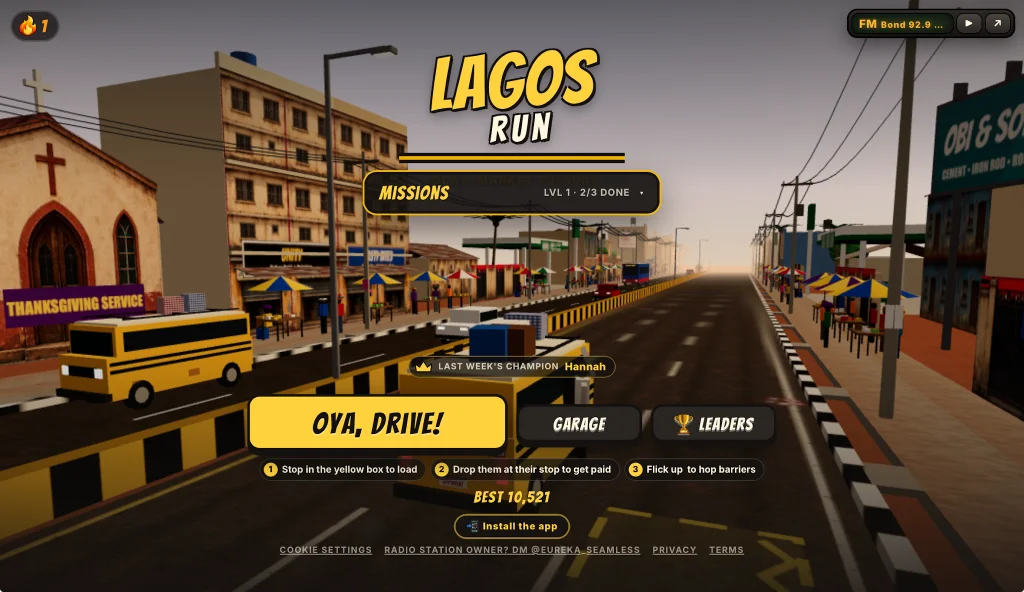
Imagine swiping left to dodge a car and swiping right around a pile of tires. You hit the brakes at yellow-lined bus stops, picking up and dropping off passengers while avoiding obstacles like pedestrians and other vehicles. This engaging experience is the essence of Lagos Run, a new browser-based endless runner game that has quickly resonated with audiences in Nigeria, racking up over 20,000 players within just two days of its launch, according to developer Opeyemi Adeniran, a senior frontend engineer based in Berlin.
Transforming Lagos into a Game
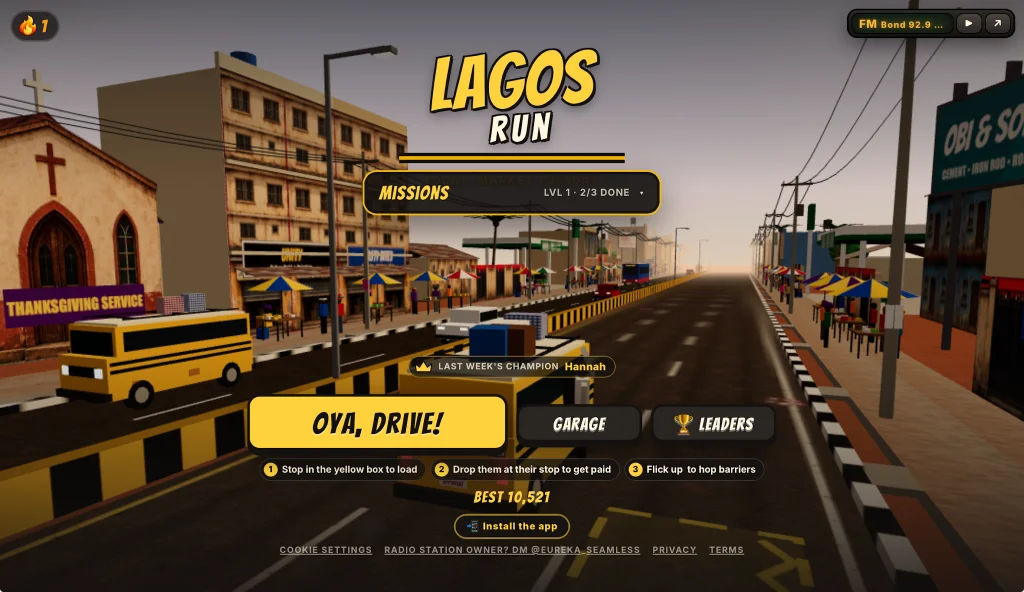
Lagos Run invites players to maneuver their virtual danfo—the iconic yellow buses of Lagos—through various challenges while collecting coins. As players navigate the streets, they encounter a virtual version of their city, complete with vibrant graphics and a soundtrack reminiscent of the hustle and bustle found in real Lagos. Adeniran, originally from the Ojuelegba suburb, leverages his own experiences growing up in the city to create an authentic gaming environment.
Adeniran's journey as a game developer began in 2017 when he first explored game development tools. He started working with Unity and gradually turned his attention to web-based games after relocating to Germany. He shared, “I missed home. I needed to go home, so I asked, ‘Why don’t I bring home to myself?’” What began as a personal project snowballed into something with greater ambitions, as he sought to recreate the essence of Lagos.
Evolving Early Concepts
To reach its current 3D format, Lagos Run underwent several iterations. The initial version was a simpler, 2D design without many of the immersive features seen today. One notable addition was a radio feature, reflecting the common practice of listening to music while riding in a danfo. Adeniran expressed, “When you are in danfo, you usually hear these guys playing radios… So, why don’t we bring the same experience you get when inside danfo into the game?
Developing Lagos Run required approximately four to five weeks of coding, leading to a game that operates without any login or sign-up barriers; players simply enter a username for leaderboard purposes. Adeniran maintains that while the game is currently free-to-play, there are avenues for monetization that could be explored in the future.

Leveraging AI for Development Efficiency
Utilizing artificial intelligence played a significant role in accelerating the game’s development process. Adeniran acknowledged that AI tools allowed him to streamline certain aspects, enabling quicker iterations and enhancing the overall design. He utilized AI-generated graphics and even sought assistance from Claude, an AI model from Anthropic, during the development. “If I were to create this game four, five years ago, it would have taken me months,” he noted.
This rapid development cycle is particularly relevant in the context of Nigeria's growing gaming industry, with revenues anticipated to reach $226.6 million by 2026. Adeniran believes that utilizing AI can bridge the gap between developers' ideas and their ability to bring them to market. Through increased production, he hopes to attract investors eager to dive into Nigeria's gaming scene.
Fostering Community Engagement
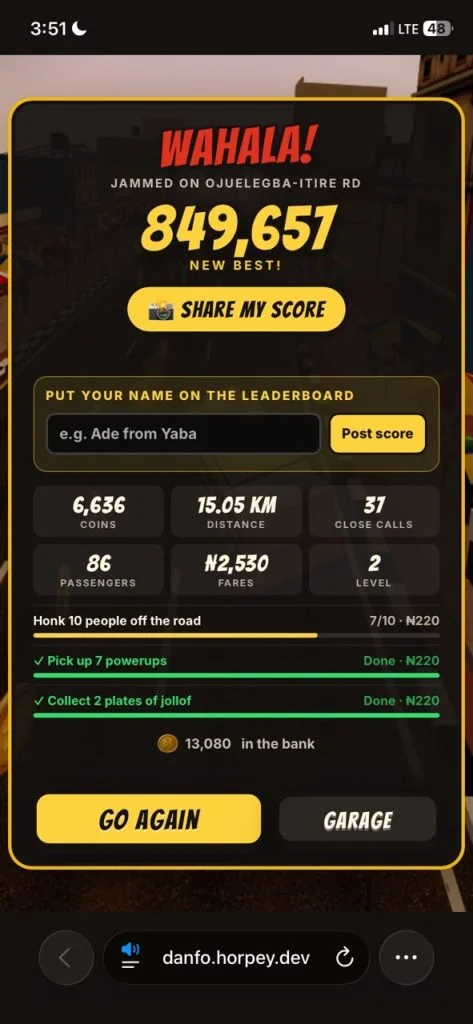
Lagos Run has not only gained traction among players but also encouraged social interaction through shared scores and friendly competition on social media. This engagement has led to player feedback, prompting Adeniran to create a WhatsApp channel for incoming suggestions. Feedback from players like Ola Lateef, who scored over 800,000 points, highlights the enjoyment of the game and the unique cultural representation of music and gameplay. “It was new, funny, and had a variety of music on the radio,” Lateef remarked.
Excitingly, the game's popularity has fueled Adeniran's ambition to develop additional games that embody the Lagos experience. He remains focused on continuously improving Lagos Run, addressing bug fixes, integrating player suggestions, and exploring potential collaborations. “I feel grateful for the love Nigerians have for helping their people,” he said, expressing appreciation for the engagement his project has elicited from the community.
As the gaming landscape evolves, Lagos Run serves as a promising model of what can emerge when cultural narratives intersect with technical innovation. Adeniran's project illustrates how local talent and AI are empowering developers in Nigeria's gaming sector, making strides toward an exciting future that echoes the vibrant life of Lagos. The important takeaway here is that creating a game that resonates requires a deep understanding of local culture, thoughtful integration of technology, and active engagement with the player community.


