Discover practical steps CPA firms can take to standardize W-9 collection and improve the efficiency of 1099 reporting, enhancing vendor management.
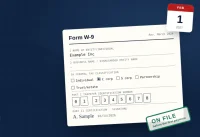
The impending January deadlines for filing 1099 forms often highlight a significant issue: data management rather than just timing. As the end of the year approaches, CPA firms are inundated with challenges, often receiving accounts payable reports containing vendors added throughout the year without completed Forms W-9. This chaotic process can lead to confusion and errors when preparing tax returns—something that can be mitigated with a more organized approach.
Understanding the Workflow Challenges
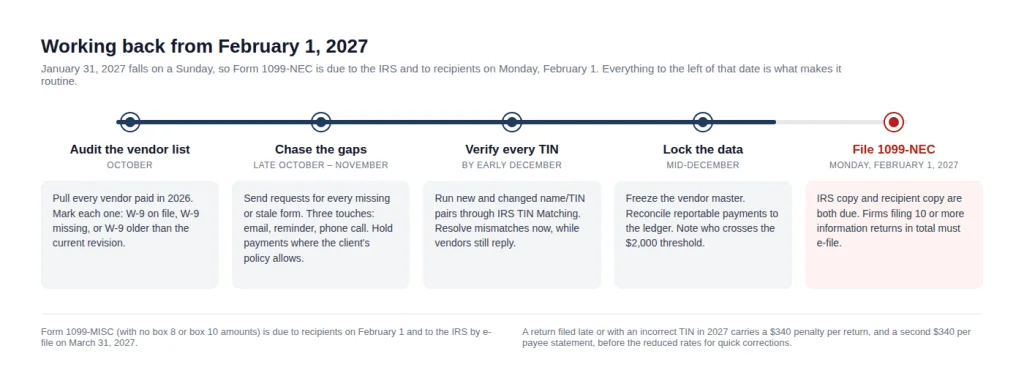
Historically, many firms face the disorganization of last-minute requests that disrupt their January workflow. When staff discover that vendor records lack essential documentation—like updated mailing addresses or reliable taxpayer identification numbers (TINs)—the scramble to rectify these issues begins. Form W-9, which is used to acquire accurate taxpayer information, shouldn't just be an afterthought. The quality of data gathered at this stage impacts not just compliance but also operational efficiency during tax reporting.

The groundwork for a seamless filing process starts early, ideally at the beginning of a vendor relationship. The IRS has clear guidelines regarding the importance of having accurate W-9 forms in hand, emphasizing that a valid W-9 must contain the payee’s name, TIN, and evidence of authorization.

Integrating W-9 Collection into Vendor Onboarding
Optimizing the timing of W-9 collection is crucial. The best moment to request a W-9 is ideally before any payment reaches the vendor. Doing so helps create clean records and enables the finance team to manage data effectively from the get-go. Delaying requests leads to complications due to various reasons, including unresponsive vendors, incomplete records, or inaccurate names recorded across systems.

Collecting W-9s in advance lays the foundation for making robust reporting decisions. Every firm should embed W-9 requests into their vendor onboarding processes. This will ensure that the information is accurate, and necessary validations can be done well ahead of filing deadlines.

Cultivating a CPA-Friendly Workflow
To enhance efficiency, CPA firms should adopt a structured five-stage workflow. This process separates data collection from payment classification and exception management, preventing a chaotic rush as deadlines loom.
1. Set Clear Vendor-Onboarding Requirements
At the outset of vendor setup, essential details like the legal tax name, TIN, and mailing address must be collected and verified. An early and thorough vetting process mitigates the risk of errors later on.
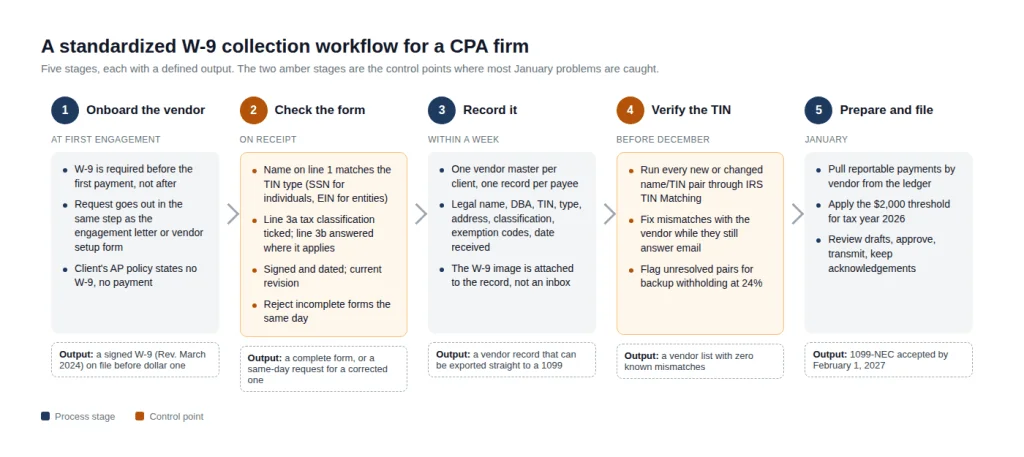
2. Create a Tax-Compliant Vendor Record
It's critical to maintain distinct fields for each vendor's operational name (DBA) and legal designation, ensuring clarity in reporting. Mislabeled records can lead to confusion during audit and reporting phases.

3. Review Payment Classifications Throughout the Year
A completed W-9 does not automatically imply that all payments made to that vendor are reportable. Periodic reviews of vendor classifications are essential to determine appropriate tax treatments for payments made.

4. Manage Exceptions Methodically
Missing W-9 forms or unresolved vendor records should not be treated with casual follow-ups. Each issue needs a designated owner, clearly defined status, and a timeline for resolution.

5. Ensure Secure Handling of Sensitive Information
Given that W-9 forms contain sensitive data, a secure process for collection and storage must be in place. Access should be limited to personnel who require it, thus safeguarding against potential data breaches.

Ensuring Accuracy in Naming and TINs
Proper alignment between the name associated with a TIN and the legal name on the W-9 is critical. Names that do not match can create hurdles during reporting, and a robust TIN matching process can serve as an effective quality control measure prior to filing.

Utilizing the IRS's TIN matching service allows firms to validate name and TIN combinations against IRS records ahead of submission. While TIN matching is useful, it should not replace the necessity of maintaining completed W-9 forms, as they serve different yet complementary functions in the reporting process.
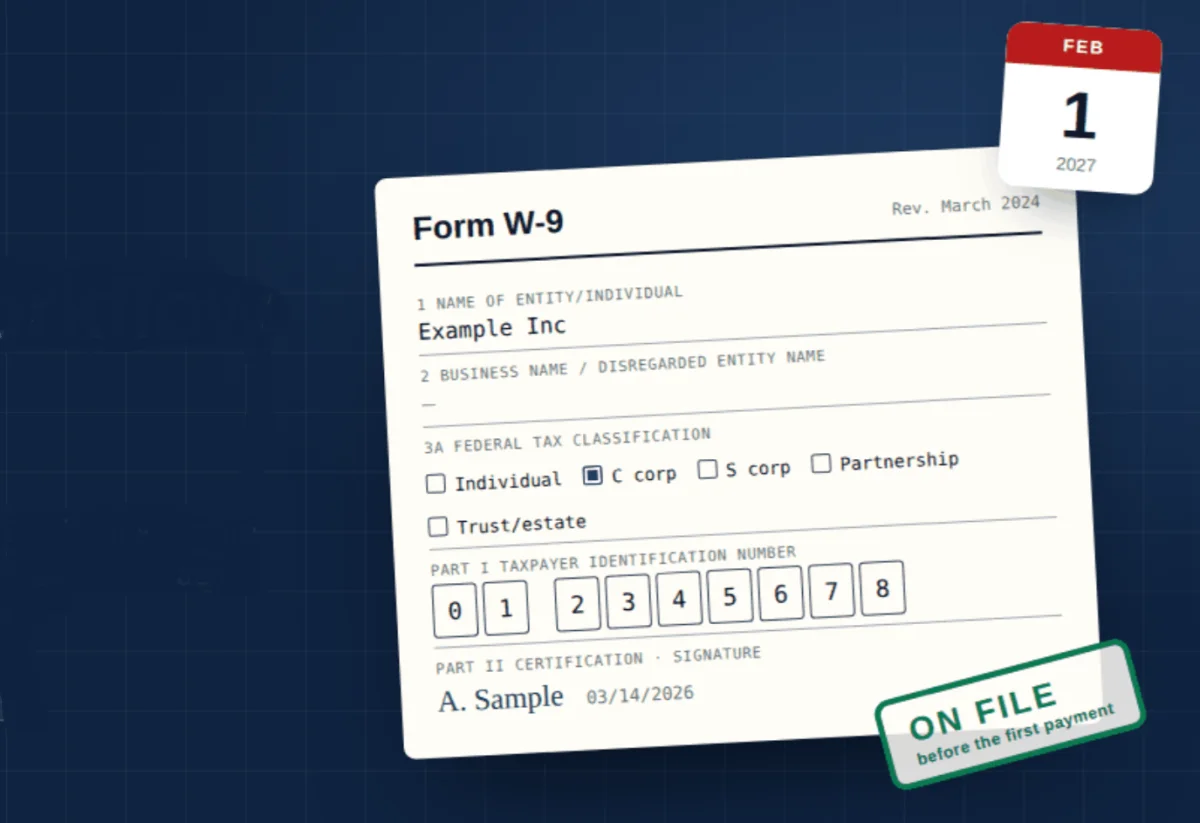
Creating a Year-End Timeline
To avoid the last-minute rush, firms should establish a clear timeline concerning W-9 collection and vendor management throughout the year. Here’s a suggested plan:
- January through September: Collect W-9s promptly as new vendors are onboarded and check for any existing vendors without W-9s.
- October: Generate a preliminary report of vendors that could incur reportable payments. Identify gaps in W-9 submissions and contact relevant parties for confirmations.
- November: Perform verification of legal names and addresses. Resolve any inconsistencies or issues identified.
- December: Conduct final cleanup of vendor data to prevent complexities from additional payments.
- January: Finalize payment records, ensure client approvals, and meet filing deadlines efficiently.
Frequently Asked Questions
Q: Does every vendor need a W-9?
A: Not every vendor will receive a 1099, but a W-9 is essential for compiling accurate reporting data.
Q: Does a completed W-9 mean a vendor has to receive a 1099?
A: No, the reporting decision is based on various factors like payment type and applicable IRS guidelines.
Q: What’s the most crucial information on a W-9?
A: The legal name and matching TIN are paramount for tax reporting.
Q: Can TIN matching replace W-9 collection?
A: No, TIN matching offers validation but does not substitute the need for a completed W-9.
Q: What if a vendor refuses to provide a W-9?
A: Document requests and assess implications for reporting and withholding, resolving to escalate as necessary.
Incorporating these practices will allow CPA firms to not only streamline their workflows but also significantly reduce the headaches associated with the January filing crunch. By making W-9 collection a distinct and manageable process, CPAs can maintain better vendor relationships and uphold their compliance standards with ease.
IRS Resources for Reference
- IRS Instructions for Form W-9
- IRS Instructions for Forms 1099-MISC and 1099-NEC
- IRS filing options for 1099 Series
By adopting structured workflows and proactive vendor data management, CPA firms can significantly improve their tax reporting processes, ensuring compliance and efficiency with minimal stress leading into the new year.


